The overcrowding tax nobody warns you about
You booked the famous city because it looked incredible in every photo. Then you got there and spent forty minutes in a line to see the thing you flew in for, paid double for a mediocre lunch on the main square, and shuffled through streets so packed you never got the quiet, wandering afternoon you actually came for. That gap between the postcard and the reality is the overcrowding tax, and on Europe's biggest names you pay it in money, patience, and time.
Here is the part most people miss: the specific thing you love about the famous city almost always exists somewhere calmer, often an hour or two away, and often for less. This post gives you nine honest pairings, each in the form of "instead of X, go to Y," with the real reason the swap works and who it suits best. No mystery villages, no overselling. Just cities that quietly deliver.
How to judge a good alternative
The trap with "underrated" lists is that they hand you a random small town and call it a secret. A quiet place is not automatically a good substitute. The trick is to name what you actually want from the famous city first, then match that one thing.
Ask yourself which of these you are really chasing:
- A specific look or atmosphere (canals, a walled old town, whitewashed cliffs).
- A particular experience (world-class food, Renaissance art, beach-plus-nightlife).
- A feeling (grand and romantic, sun-soaked and slow, medieval and compact).
Once you can name it in a sentence, a good alternative becomes obvious: it offers the same core appeal, with meaningfully fewer people and usually a lower price, and it is realistic to reach. If a swap only nails one of those, it is a compromise, not an upgrade. Everything below is chosen against that test. Where a claim is a matter of taste, it is flagged as one.
The pairings
Instead of Barcelona, go to Valencia
What people love about Barcelona is the mix: beach in the morning, bold architecture, tapas at night, all in a warm Mediterranean city. Valencia, a couple of hours south along the coast, offers the same combination without Barcelona's peak-summer density. You get a genuine city beach, a huge car-free green park in the old riverbed (the Turia gardens), the futuristic City of Arts and Sciences, and a compact old town. It is also the birthplace of paella, so the food case makes itself.
Barcelona is still worth doing well if it is your pick, and our 3-day Barcelona itinerary is built to dodge the worst of the crush. But if you want the Mediterranean-city-break feeling with more room to breathe, Valencia is the smarter first trip. Best for: first-timers who want beach, food, and architecture without the elbow-to-elbow Ramblas experience.
Instead of Florence, go to Bologna
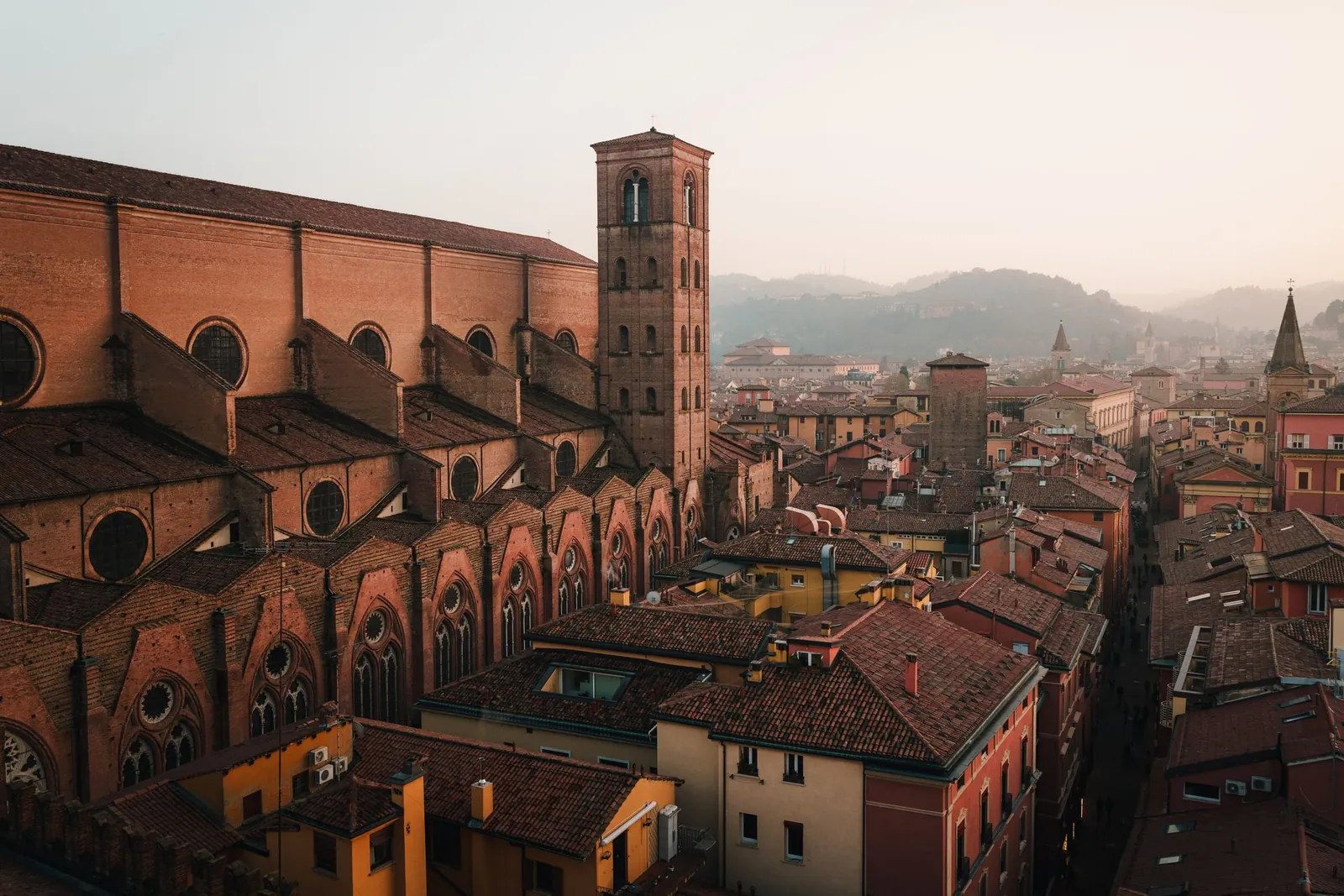
Florence is the Renaissance in one walkable center, and that is exactly why its streets and museum queues can feel overwhelming in season. Bologna, less than 40 minutes away by fast train, gives you a stunning historic core, some 40 kilometers of covered porticoes (a UNESCO-listed feature that keeps you shaded and dry as you wander), leaning medieval towers you can climb, and one of the strongest food scenes in Italy. Ragu, tortellini, and mortadella are local, not tourist-trap imitations.
You trade a handful of specific masterpieces for a richer everyday city that far fewer visitors prioritize. Best for: food-forward travelers and anyone who wants Italian old-town beauty without organizing the whole trip around timed museum entries.
Instead of Venice, go to Ghent
Venice sells a very particular fantasy: water instead of roads, bridges, faded grand facades. The problem is that the fantasy now comes with cruise crowds and a day-tripper tax. Ghent, in Belgium, delivers a genuine canal-and-medieval-guildhall cityscape, with the bonus that people actually live and work there, so it never feels like a theme park. The waterfront rows of stepped-gable houses, the castle in the middle of town, and the low-key student energy give it real life.
It is not Venice, and it does not pretend to be. But if what you wanted was that specific romance of old stone reflected in water, Ghent gives you a large share of it with a fraction of the congestion. Best for: couples and slow wanderers who love the canal atmosphere more than the specific idea of Venice.
Instead of Amsterdam, go to Utrecht
If your Amsterdam wish list is canals, bikes, gabled houses, and good museums, note that Utrecht has all of that and sits about half an hour away by train. Its canals are unusual: the old wharves sit a level below the street, lined with cafes and workshops right at the water. The city is compact, walkable, and far less dominated by stag parties and selfie crowds than central Amsterdam has become.
You give up some of Amsterdam's big-hitter museums and nightlife scale. In exchange you get a friendlier, more livable version of the same Dutch canal-city charm. Best for: travelers who want the Dutch look and cafe culture without the bachelor-party backdrop.
Instead of Prague, go to Ljubljana
Prague draws people with a fairy-tale old town, a castle on the hill, and a river running through it. Ljubljana, the Slovenian capital, hits the same notes at a smaller, calmer scale: a pedestrianized center along the Ljubljanica river, a hilltop castle reached by funicular, dragon-themed bridges, and a genuinely relaxed cafe-terrace culture. Much of the core is car-free, which makes aimless wandering a pleasure rather than a dodge-the-crowds exercise.
It is smaller than Prague, so a long weekend covers it comfortably, and it works beautifully as a base for day trips to Lake Bled and the Julian Alps. Best for: anyone who wants a storybook central-European capital without Prague's Old Town Square scrum.
Instead of Santorini, go to Naxos
Santorini is a caldera view and whitewashed villages, and that is a real thing you cannot fully replicate. But most people also want Cycladic beauty, blue-domed lanes, good beaches, and a Greek-island slow-down, and for that Naxos is a strong, less frantic pick in the same island group. It has a walkable old town under a Venetian castle, long sandy beaches on the west coast (rare in the Cyclades), mountain villages inland, and prices that generally sit below Santorini's peak.
Be honest with yourself about the sunset caldera photo. If that exact image is the whole point, Santorini is Santorini. If you want the wider Greek-island experience with more beach and less crush, Naxos is a better week. Best for: beach lovers and families who want island life over one iconic viewpoint.
Instead of Dubrovnik, go to Kotor
Dubrovnik is a walled seaside old town you can circle on its ramparts, and cruise-ship days can make its lanes feel like rush hour. Kotor, just down the Adriatic coast in Montenegro, offers a compact medieval walled town wrapped around a dramatic fjord-like bay, with a steep fortress climb that rewards you with a view rivaling anything on the coast. It carries a similar Venetian-influenced look for, in most cases, noticeably less money.
Kotor gets its own cruise traffic, so time your walls-and-old-town wandering for early morning or evening. Best for: travelers chasing the walled-town-by-the-sea experience who want the wow without Dubrovnik's prices.
Instead of Lisbon, go to Porto
Lisbon has become one of Europe's hottest weekend cities, with the crowds and rising costs to match. Porto, up in the north, gives you the same Portuguese magic in a more concentrated, hillier package: tiled facades, a dramatic riverfront along the Douro, vintage trams, and the port-wine cellars just across the bridge in Gaia. The historic Ribeira district is postcard-dense but the city overall still feels lived-in.
It is smaller and steeper than Lisbon, which many people count as a plus. Best for: wine-and-views weekenders who want atmosphere and river light without Lisbon's peak-season price tags.
Instead of Paris for a weekend, go to Lyon
For a grand, romantic, food-heavy French weekend, Paris is the default, and its center in peak season shows it. Lyon, two hours south by fast train, is France's celebrated gastronomic capital: two rivers, a UNESCO-listed Renaissance old town threaded with hidden covered passageways (the traboules), a hilltop basilica with sweeping views, and the traditional bouchons where a proper French meal costs a fraction of a comparable Paris table. It reads as elegant and unmistakably French, with far less pressure on every reservation and sightline.
You lose the single most famous skyline in the world, which is a fair thing to want. But for the actual experience of eating well and wandering beautiful streets, Lyon over a weekend is hard to beat. Best for: food-first couples who want a refined French city break without Paris prices or Paris queues.
Time it right and the swap gets even better
Every one of these cities is calmer and cheaper outside the July-August peak. Shoulder season, roughly April to early June and September into October, is the quiet lever that makes a good alternative feel almost private, with mild weather and lower flight and hotel prices. Our guide to shoulder-season travel breaks down how to pick the exact weeks that dodge the crowds without gambling on the weather.
Most of these pairings also suit a tight schedule: several are perfect for a long weekend, and if you only have two days, our 48-hour city break playbook shows how to structure it so you actually rest instead of route-marching.
Getting there: the honest catch
The one real trade-off with an underrated city is connections. Famous cities have the most direct flights, so an alternative can mean a connection or a short train ride from a bigger hub. Before you commit, check the practical route:
- Direct flight? Cities like Valencia, Porto, and Bologna are well served, so this is often a non-issue.
- Hub plus train? Utrecht (from Amsterdam), Ghent (from Brussels), and Bologna (from Milan or Florence) are quick, reliable rail hops. Kotor and Naxos take more planning by bus, ferry, or a smaller airport.
- Total door-to-door time. A cheaper fare that adds four hours of transfers is not always the better deal. Compare the whole journey, not just the airfare.
If a rail approach appeals, especially for the Italian and central-European pairings, our Europe by train itinerary shows how to string cities together and let the transport be part of the trip. And if you are still deciding, browsing side by side helps: you can explore destinations and compare a few of these before you book anything.
Frequently asked questions
Are these underrated cities actually cheaper than the famous ones? Usually, yes, especially on accommodation and everyday food, and the effect is strongest in shoulder season. It is not a guarantee for every date, so treat the price advantage as a strong tendency rather than a fixed rule and compare real dates before booking.
Will I miss out by skipping the famous city? Only if the famous city's single defining feature is the entire point of your trip, like Santorini's caldera sunset. For everything else (canals, walled towns, food, Renaissance streets), the alternatives deliver the same core appeal with more breathing room.
Are these cities good for a first trip to Europe? Very much so. Valencia, Porto, Bologna, and Ljubljana are compact, safe, walkable, and easy to navigate, which arguably makes them gentler first trips than a sprawling, high-pressure capital.
When is the best time to visit to avoid crowds? Aim for late spring or early autumn. You get mild weather, thinner crowds, and lower prices, without the deep-winter risk of short days and closed seasonal spots.
How many days do I need in each? Two to three days covers most of these comfortably as a city break, with Ljubljana and Kotor also working well as a base for nearby day trips if you have longer.
The point is the match, not the mystery
A good alternative is not about being contrarian or hunting for somewhere nobody has heard of. It is about naming the one thing you want from the famous city, then finding the calmer place that delivers it with fewer people and a smaller bill. Do that honestly and you rarely feel like you settled. You feel like you outsmarted the crowd.
That matching is exactly the kind of legwork worth handing off. Describe the trip you want in a sentence and let Atlazi's planner build a day-by-day itinerary around one of these cities, or start by browsing the full destination list to see which quiet alternative fits your next long weekend.