
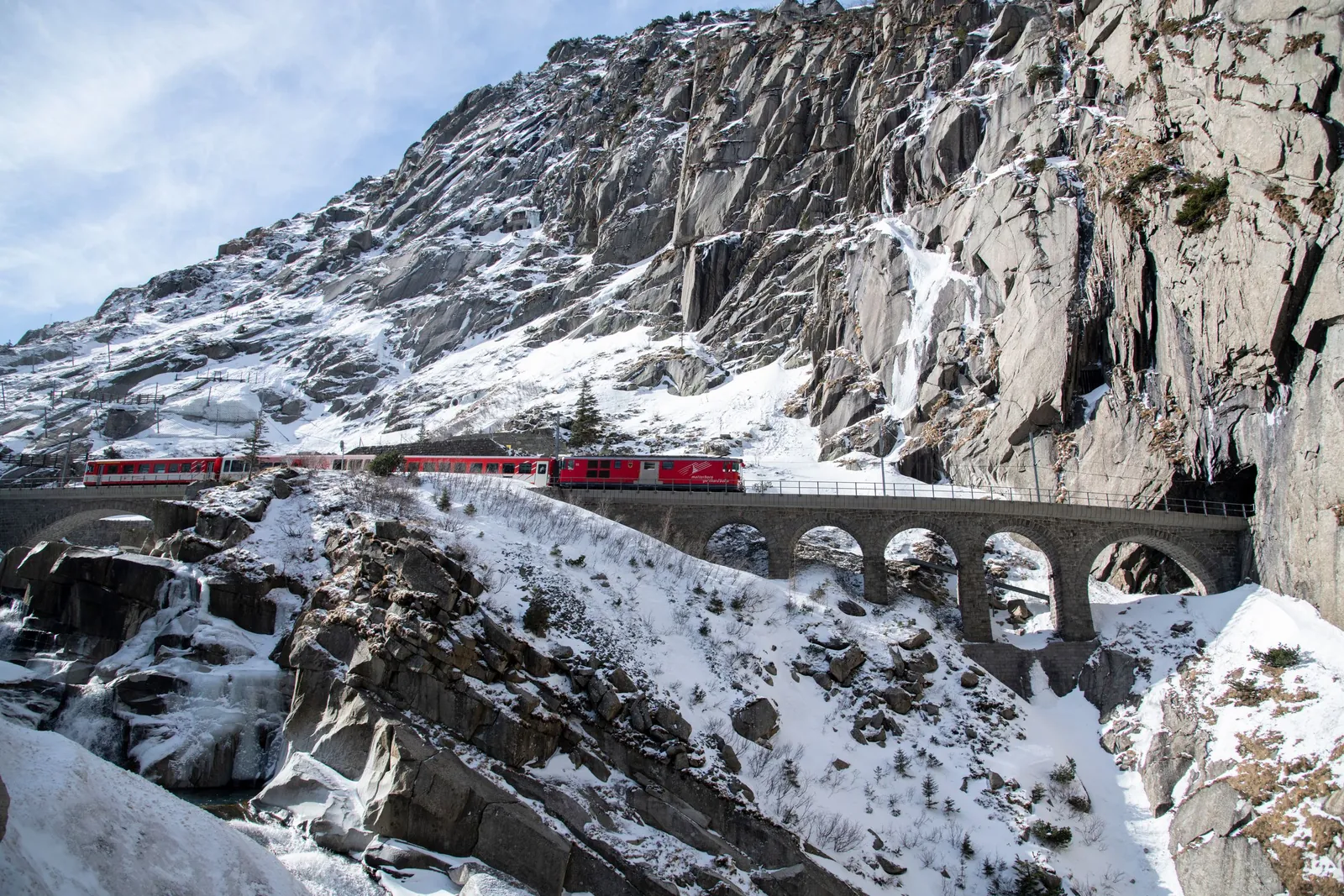
The train is not the boring part
Most trip plans start with a flight search. You find a cheap fare into one city, another out of a second, and then spend the whole trip working backward from two airports, two rounds of security, and two afternoons burned in transit. On a rail trip, that layer disappears. You step onto a platform in the middle of Paris and step off in the middle of Zurich, walking distance from your hotel, coffee still warm.
That is the real argument for going by train in Europe, and it's what generic articles get wrong. Rail travel is efficient not because of the scenery, though the scenery helps, but because the network was built to connect city centers and a well-sequenced route turns your travel days into part of the trip instead of a tax on it. This post gives you a rail-first method: how to plan around the network, run the pass-versus-tickets math honestly, handle reservations and night trains, and one worked 10-day route so you can see the logic in motion.
Think rail-first: plan around the network, not around flights
A rail-first plan flips the usual order. Instead of picking cities and then figuring out how to connect them, you look at the map of fast lines and let it suggest which cities belong on the same trip.
Europe's high-speed network has a shape. Paris, Lyon, and the south of France sit on one spine. The Rhine corridor links Cologne, Frankfurt, and Basel. Northern Italy strings Milan, Verona, Venice, and Florence along a near-continuous fast line. The trick is to notice these corridors and build your route so most of your hops follow them, rather than cutting across the grain and forcing slow connections. Two practical habits make this easier:
- Start from a rail map, not a bucket list. Cities that look close on a flight map can be a painful train day apart, and cities that feel far can be two comfortable hours. Let the lines rank your candidates.
- Pick anchor cities that are hubs. A hub like Munich, Zurich, or Milan gives you many onward options and makes a great base for day trips before you move on. If you like the idea of settling in one place and radiating out, the home base and day trips approach pairs naturally with rail, since hub stations are exactly where the regional lines fan out.
The big money question: rail pass vs point-to-point tickets
This is where people overspend or overthink, so let's be concrete. You have two ways to pay.
A rail pass (Eurail for non-Europeans, Interrail for residents) gives you a set number of travel days within a window, say 7 travel days in one month, and on a travel day you can take as many trains as you like. A point-to-point ticket is a single ticket for a single journey, priced like an airfare: cheap far in advance, expensive last minute.
Here is the honest tradeoff. A pass wins on flexibility and dense, long-distance itineraries: if you're hopping between many countries, taking several long hauls, and want loose dates, it can be cheaper and far less hassle. Point-to-point tickets win when your trip is a handful of well-defined legs you can book early. A Paris-to-Lyon or Madrid-to-Barcelona ticket bought weeks ahead can be a fraction of the walk-up price.
How to actually check, without guessing:
- List your legs. Write down each city-to-city hop you know you'll take.
- Price each leg point-to-point on the national operator's site (SNCF Connect for France, Trenitalia or Italo for Italy, DB for Germany, SBB for Switzerland). Note the cheapest advance fare.
- Add up the advance fares and compare that total to a pass covering the same number of travel days, including the reservation fees a pass still charges.
- Weigh flexibility. Cheap advance fares are usually non-refundable, so if you value changing plans on a whim, add a mental premium to the point-to-point column.
Treat any figures you find as examples that move with the season and the date. The method is what matters: get real numbers for your real legs, then decide. As a rough rule, a few long legs you can book early favor tickets; a loose, many-leg trip favors a pass.
Reservations and train types
Not all trains are equal, and the difference trips up first-timers more than the ticket itself.
- High-speed trains (TGV in France, Frecciarossa and Italo in Italy, ICE in Germany, AVE in Spain, Eurostar across the Channel) are fast, comfortable, and almost always require a compulsory seat reservation. You can't just hop on with a pass; you book a specific train, time, and seat, usually with a small per-seat fee even as a pass holder.
- Regional and intercity trains are slower, stop more often, and typically need no reservation. With a pass you often just walk on. These are the trains that make a pass feel magical and short scenic hops effortless.
The classic mistake is buying a pass, assuming it covers everything, then finding the popular TGV to the coast is reservation-only and the pass-holder quota sold out days ago. High-speed trains release a limited number of pass-holder seats per train, and on busy routes they go early, so reserve your high-speed legs as soon as your dates are firm. Think of the pass as your fare and the reservation as your seat: on fast trains you need both.
Night trains: when an overnight saves you a day and a hotel
Night trains are back in a real way. Austria's Nightjet network now threads a growing web of routes, Vienna to Paris, Zurich to Amsterdam, Munich to Rome and others. The pitch is genuinely useful: a long journey that would eat a daytime becomes a night's sleep plus a hotel night saved. The math works when three things line up:
- The distance is long, roughly an 8-to-12-hour haul, so you sleep through most of it rather than arriving at 2 a.m.
- You book a bed, not a seat. A reclining seat in a shared coach is cheap and miserable; a couchette (a simple bunk) or a private sleeper is the difference between arriving rested and arriving wrecked. Budget for the bed.
- The timing is civilized. The best night trains leave mid-evening and arrive after breakfast. Watch for routes that dump you on a platform before dawn.
Where night trains do not pay off: short hops you could do in three daytime hours. And book early, since sleeper cabins are limited and sell out well before the seats do.
Sequence your route to avoid backtracking
The single biggest efficiency win in rail planning is refusing to double back. Every leg you repeat is a travel day you spend seeing nothing new.
The fix is to commit to one direction and let your cities fall along it. Paris to the Alps to northern Italy is a clean west-to-southeast arc; Amsterdam down the Rhine to Switzerland is a clean north-to-south line. You fly into the first city and out of the last, which in airfare terms is an open-jaw ticket, and you never retrace a segment. This is the logic that makes multi-country trips efficient, and the full multi-city trip planning breakdown covers the sequencing and open-jaw math in depth.
In practice that means three habits: order cities geographically rather than by excitement, put your open-jaw endpoints at the extremes of the arc, and cluster the short scenic hops in the middle where regional trains and a pass shine.
How long per city, and the reality of a rail day
Two or three nights per city is the sweet spot for most first rail trips. Two nights gives you one full day plus arrival and departure edges; three gives you two full days and room to breathe. Fewer than two and you're day-tripping with luggage.
Be honest about what a travel day costs, though. Even a smooth two-hour hop eats a chunk of the day once you add packing up, checking out, getting to the station with a buffer, the ride, and finding your next hotel. A morning train means you arrive with an afternoon to spare; a mid-afternoon one means the travel is the day. So book the morning train where you can.
Booking windows: when tickets are released
Advance fares are the whole game for point-to-point travelers, and they run on a schedule.
- Most operators open bookings 3 to 6 months ahead. The cheapest fare buckets sell in order, so the earliest buyers get the lowest prices.
- The sweet spot is often 2 to 3 months out, once the timetable is stable but before the cheap buckets empty on popular routes.
- Pass-holder reservations for high-speed trains open on a similar horizon and are quota-limited, so reserve those as early as your dates allow.
- Regional trains rarely need advance booking and cost the same on the day, your flexibility cushion for the loose middle of a trip.
If your dates are fixed and your legs long-distance and popular, booking early is the clearest money you'll save on the trip.
Practicalities that make or break the day
- Pack so you can carry it up stairs. Not every platform has a lift, and you'll haul your bag over footbridges and into overhead racks. One bag you can lift beats two you have to drag.
- Arrive earlier than you think for big stations, but not airport-early. Fifteen to twenty minutes at a large terminus like Paris Gare de Lyon or Roma Termini is plenty, and the platform number often posts only 10 to 20 minutes out, so watch the board.
- Respect tight connections. If a missed connection would strand you, buy both legs on one through-ticket so the operator rebooks you for free when the first train runs late.
- Stay connected across borders. Your reservation, ticket, and live platform updates usually live in an app, and roaming across three countries in a day gets expensive fast. A travel eSIM keeps you online the whole route without swapping SIMs at every border.
A worked example: 10 days, Paris to the Alps to northern Italy
Here's one realistic arc that shows the rail logic. Fly into Paris, out of Venice, open-jaw, no backtracking.
- Paris, nights 1 to 3. Land, settle, two full days in the city. Book the onward TGV early.
- Into the Alps, nights 4 to 5. A fast TGV south (roughly two hours to Lyon) drops you toward the mountains, where you base a night or two for the scenery. This is regional-train country: short, gorgeous hops that need no reservation.
- Across to Switzerland, nights 6 to 7. Work east through the Alps toward Zurich or Lucerne. Some of these mountain legs are the scenic centerpiece of the trip; the ride is the sightseeing.
- Zurich to Milan, night 8. A direct EuroCity threads the Gotthard corridor to Milan in around three and a half hours, one of Europe's great rail days. Reservation recommended.
- Milan to Venice, nights 9 to 10. A fast Frecciarossa or Italo runs to Venice in roughly two and a half hours, reservation compulsory. Fly out of Venice.
Rough shape: five stops, four of them two-plus nights, one arrival-and-move night in Milan, every leg pushing southeast. The two long high-speed legs (Zurich to Milan, Milan to Venice) are the ones you book in advance; the Alpine middle is where a pass or a fistful of cheap regional tickets does the work. On this compact arc the daytime scenery is worth staying awake for, so save night trains for a longer, flatter route.
Common rail-trip mistakes
- Assuming a pass covers everything. High-speed trains still need a reserved seat, often for a fee, and the pass-holder quota sells out.
- Booking nothing in advance on popular long routes. Walk-up high-speed fares are brutal; cheap advance fares are the single biggest saving available.
- Scheduling zero buffer before a flight or a night train, so one late regional train costs you a non-refundable connection.
- Ignoring the season. Peak-summer trains and reservations fill fast, while shoulder-season travel means emptier trains, easier reservations, and better window views.
Frequently asked questions
Is a rail pass worth it for a two-week Europe trip? It depends on your legs, not the trip length. Price each hop point-to-point at advance fares, total it, and compare against a pass covering the same travel days plus reservation fees. Long, multi-country, loosely-dated trips favor a pass; a few bookable-early long legs favor tickets.
Do I still need seat reservations if I have a rail pass? On high-speed trains, yes. TGV, Frecciarossa, Italo, ICE, AVE, and Eurostar require a compulsory reserved seat, usually with a small fee even for pass holders, and the quota is limited. Regional and most intercity trains need no reservation; you just board.
Are European night trains actually comfortable? In a couchette or private sleeper, yes, and they can save you a daytime plus a hotel night on a long haul. A plain reclining seat is not. Book the bed, book early since sleepers sell out, and favor routes that leave mid-evening and arrive after breakfast.
How far in advance should I book European train tickets? Most operators open bookings 3 to 6 months ahead, and the cheapest fares sell first. For long high-speed routes with fixed dates, booking 2 to 3 months out usually locks in the best price. Regional trains cost the same on the day, so leave those flexible.
What's the biggest mistake first-time rail travelers make? Backtracking. Retracing a leg wastes a travel day. Commit to one direction, put your fly-in and fly-out cities at the two ends of the arc, and let the rest fall along the line.
Let the map do the planning
A rail-first trip rewards good sequencing more than anything else: one direction, hub cities, high-speed legs booked early, and regional hops kept loose in the middle. Do that and your travel days stop feeling like lost time and start feeling like the trip. The fiddly part is holding it all at once, the corridors, the reservations, the nights per city, the booking windows. That's the work Atlazi's planner is built for: describe the route you want and it sequences the cities, estimates realistic travel days, and turns each stop into a day-by-day plan you can actually follow.
Start building your rail-first route in the planner, or browse destinations along the lines to see which cities belong on the same arc.