
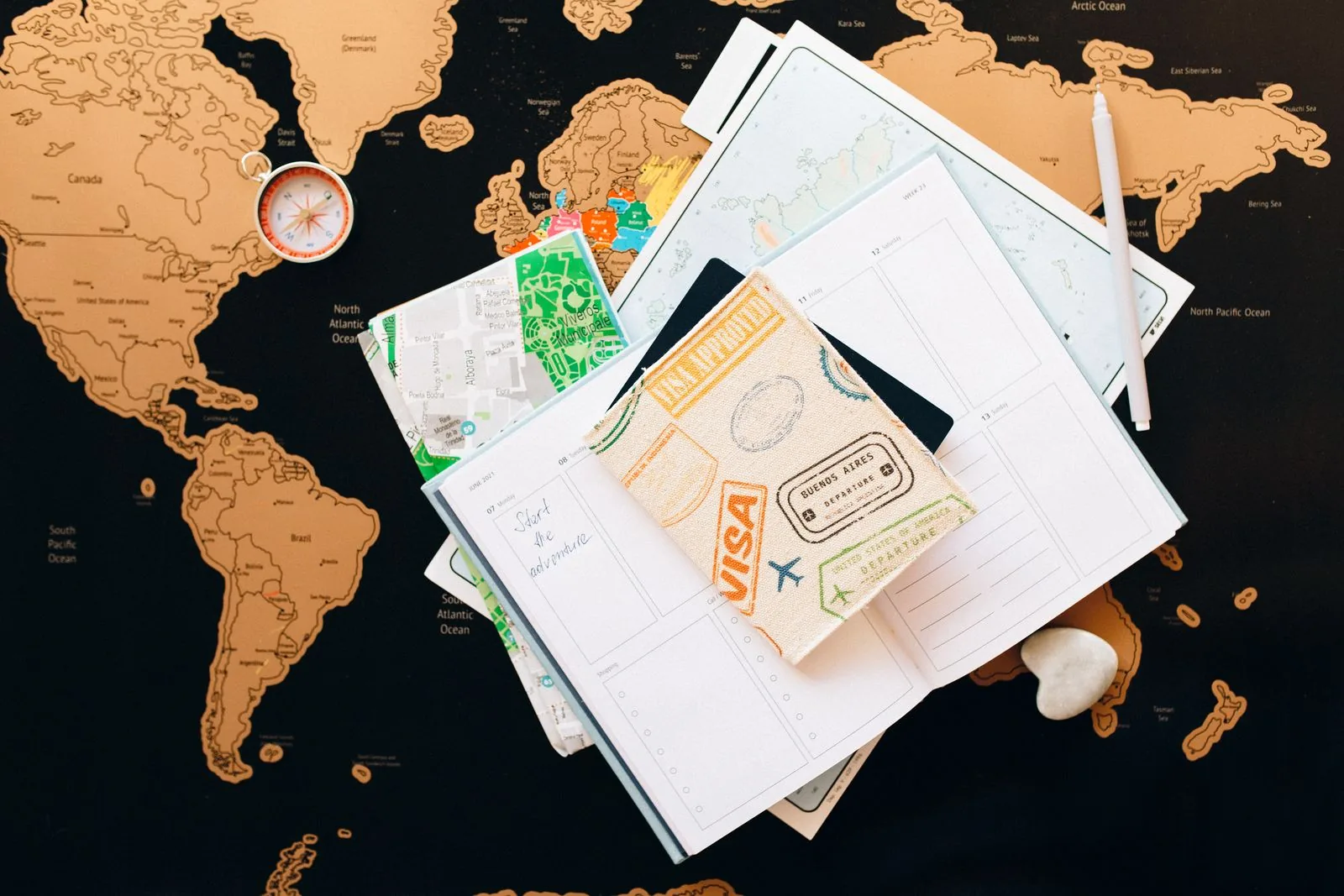
A great trip rarely happens by accident. Behind every relaxed, well-paced holiday is an itinerary that quietly did its job: it put the right places in the right order, left room to breathe, and made sure nobody spent the afternoon zig-zagging across town in the heat. The good news is that building an itinerary like that is a learnable process, not a special talent. This is the complete, step-by-step guide to how to plan a trip itinerary from a blank page to a day-by-day plan you can actually follow.
We will walk through every stage in order: choosing a destination, deciding how long to go, picking your must-see points of interest, sequencing them geographically so you stop backtracking, factoring in opening hours and weather, setting a realistic budget, packing smart, and booking flights, stays and activities. Along the way we will show where a tool like Atlazi's AI trip planner can do the tedious parts for you, so you can spend your energy on the fun decisions.
Step 1: Choose the right destination
Every itinerary starts with a single question: where, and why now? Before you fall in love with photos, get honest about three things.
- Your travel window. The dates you can actually go often decide the destination more than the other way around. A place is a completely different experience in high season versus shoulder season.
- Your travel style. City-hopping, slow beach time, hiking, food, culture, nightlife. A destination that fits your style beats a famous one that does not.
- Your constraints. Budget, flight time, visa requirements, and who you are travelling with. A 14-hour flight with a toddler is a different project than a two-hour city break.
If you are torn between a few options, use season and cost as tie-breakers. Shoulder season, the weeks just before and after peak, is the sweet spot for most travellers: fewer crowds, milder weather, and lower prices, without the closures of the off-season. Browsing destination guides is a fast way to sanity-check the vibe of a place. Atlazi has guide content for 200 destinations, so you can read up on what a city is actually known for before you commit.
Step 2: Decide how long your trip should be
Trip length is where most itineraries go wrong. People try to see a huge city in two days or stretch a small town across a week. A simple rule of thumb helps.
- A major city (Barcelona, Rome, Tokyo): 3 to 4 full days to see the headline sights without rushing.
- A small city or town: 1 to 2 days is often plenty.
- A region or multi-city route: count roughly 2 to 3 nights per base, and be ruthless about how many bases you add.
Remember to count real days, not calendar days. A flight that lands at 9 p.m. is not a sightseeing day, and the morning you fly home is gone too. If you have five nights, you likely have three-and-a-half usable days. Plan for the days you actually get, and you will avoid the classic mistake of an itinerary that looks great on paper and feels frantic in real life.
Step 3: Choose your must-see points of interest
Now the fun part. Make a long list of everything that appeals: landmarks, museums, neighbourhoods, viewpoints, markets, that restaurant a friend raved about. Do not filter yet. Then sort the list into three tiers.
- Non-negotiables. The two or three things that would make you regret the trip if you missed them.
- Strong wants. Great if they fit, easy to drop if they do not.
- Nice-to-haves. Fillers for spare hours and rainy afternoons.
Be realistic about how much fits in a day. A sustainable pace for most travellers is two to three major sights per day, plus meals and unstructured wandering. Four or more big-ticket stops in a day usually means you are speed-walking past things you flew across the world to see. Leave gaps. The unplanned coffee, the street you turn down on a whim, the long lunch. These are often the memories people bring home.
Step 4: Sequence your stops geographically (stop backtracking)
This is the single highest-leverage step, and the one travellers most often skip. You can have a perfect list of sights and still waste hours because you visited them in a random order, crossing the city back and forth.
The fix is to group your stops by neighbourhood and tackle one area per day, or per half-day. Think of the map as a set of clusters. All the sights in the old town on one day, the museums and park district on another, the waterfront on a third. Within each cluster, order the stops so you walk in a loop or a straight line rather than doubling back.
Doing this well by hand means juggling a map, opening hours, and walking distances all at once, which is genuinely fiddly. This is exactly the problem Atlazi's AI planner was built to solve. It sequences real points of interest geographically to minimise travel time, and it is transit-aware: it knows the walking and driving times between your stops, so the day flows in a sensible order instead of sending you across town and back. You pick the places that matter to you; the planner handles the logistics of putting them in the right sequence. If you want to see what a finished, well-sequenced plan looks like, our 3 days in Barcelona itinerary is a worked example you can borrow from.
Step 5: Factor in opening hours, timed tickets, and weather
A beautiful sequence falls apart if you arrive at a museum on the one day it is closed. Before you lock a day in, layer in the practical constraints.
- Opening hours and closing days. Many museums close one day a week; some big attractions shut for lunch or close early. Check each headline stop.
- Timed-entry tickets. Popular sights increasingly require you to book a specific entry slot in advance. That slot becomes the anchor your day is built around.
- Best time of day. Sunrise viewpoints, sunset rooftops, markets that are dead by afternoon. Some experiences only work at a certain hour.
- Weather. Plan indoor options (museums, galleries, food halls) for the hottest or wettest part of the day, and save outdoor sights for when conditions are kind.
Weather deserves a special mention because it can quietly reshape a whole day. Building your plan around the forecast, outdoor sights on the clear day, indoor ones when rain is due, is one of the easiest ways to protect a trip. Atlazi's planning is weather-aware, so your plan can adapt around the forecast rather than fighting it. When a storm rolls in, you want a plan that already has a dry alternative built in.
Step 6: Build a realistic budget and track it
A budget is not about spending less; it is about spending on purpose. Break your trip costs into clear buckets so nothing sneaks up on you.
- Transport: flights, airport transfers, local transit, any car rental.
- Accommodation: the biggest fixed cost for most trips.
- Food and drink: a daily estimate is easier to manage than one big guess.
- Activities and tickets: museum entries, tours, experiences.
- A buffer: set aside 10 to 15 percent for the things you cannot predict.
The trick is not just setting a budget but watching it as you go, because that is when overspending actually happens. Atlazi includes a per-trip budget tracker, so you can see how your plan is adding up before you leave and keep an eye on it while you travel. Knowing you still have room in the activities bucket makes it much easier to say yes to the spontaneous boat trip.
Step 7: Plan your packing around the actual plan
Packing is the step everyone leaves to the last stressed hour, which is exactly why things get forgotten. The smarter approach is to pack for your itinerary, not for a generic idea of the destination.
Your plan already knows a lot: the length of the trip, the season, the weather, and the kinds of activities you have booked. A beach day, a fine-dining reservation, and a mountain hike each demand different gear. Rather than staring at a drawer, let Atlazi generate a packing list tailored to your trip. Atlazi's AI packing lists take the trip's length, destination, weather and planned activities into account, so you get a checklist that matches what you are actually going to do, not a one-size-fits-all template. Fewer forgotten chargers, fewer just-in-case items you never touch.
Step 8: Book flights, stays, activities, cars and connectivity
With the shape of the trip settled, booking becomes straightforward instead of overwhelming. A sensible order of operations:
- Flights first. They are usually the largest cost and the hardest to change, so lock them in early once your dates are firm.
- Accommodation next. Choose a base in a neighbourhood that sits central to your clustered plan. Where you sleep quietly determines how much time you spend in transit every single day.
- Timed tickets and tours. Book the sights that require advance slots as soon as your day-by-day is set.
- Car rental, if you need it. Essential for regions and road trips, often unnecessary and even a hassle in dense cities with good transit.
- Stay connected. A travel eSIM gives you maps, transit apps and translation the moment you land, with no roaming bill shock. If that is new to you, our complete guide to travel eSIMs walks through how they work.
Atlazi brings all of this into one place. You can search for flights, stays, activities, car rental and travel eSIMs, then hand off directly to book, so your research and your reservations live alongside the same plan instead of scattered across a dozen tabs.
A quick worked example
Say you have five nights in a major European city. Counting real days, that is three-and-a-half usable ones. You list your sights and find your non-negotiables cluster into three neighbourhoods. You assign one cluster per day, sequence each day as a walking loop, and anchor Day 2 around a timed museum ticket you booked for late morning. You check the forecast, see rain on Day 3, and swap that day's outdoor viewpoint for an indoor gallery. Your budget tracker shows room in the food bucket, so you book one memorable dinner. Your packing list, built from the plan, reminds you to bring layers and a compact umbrella. You land with an eSIM already active and walk straight to your first stop. That is the whole method in miniature, and it is exactly the flow Atlazi is built to run for you.
Common itinerary mistakes to avoid
Even experienced travellers fall into the same traps. Watch for these.
- Overpacking the schedule. The most common mistake by far. If every hour is booked, a single delayed train or long lunch topples the whole day. Plan fewer things and enjoy them more.
- Ignoring the map. A list of sights is not a plan. Two attractions that look close on a website can be an hour apart on the ground. Always check where things actually are before you commit an order.
- Forgetting travel time between cities. On multi-stop trips, the transit day itself eats hours. A morning train plus check-in can swallow half a day, so do not schedule a packed afternoon on top of it.
- Booking accommodation in the wrong area. A cheaper hotel far from everything costs you in daily transit time and taxi fares. Central and slightly pricier often wins overall.
- No buffer for the unexpected. Jet lag, weather, a sight that captivates you longer than planned. Leave slack so surprises are a pleasure, not a problem.
- Not saving your plan offline. Signal fails, apps crash. Keep an offline copy of your day-by-day and key confirmations.
Frequently asked questions
How far in advance should I plan a trip? For flights and accommodation, booking a couple of months ahead for popular destinations usually balances price and choice. The day-by-day itinerary itself can come together closer to departure, once your bookings and dates are firm.
How many activities should I plan per day? Two to three major sights, plus meals and free time, is a comfortable pace for most people. Adjust down if you are travelling with young children or want a slower trip.
Should I plan every hour of the trip? No. Anchor the fixed points, timed tickets, reservations, transit, then leave generous gaps. The best travel moments are often unplanned, and a rigid schedule leaves no room for them.
What is the single most useful planning step? Sequencing your stops geographically. Getting the order right, so you loop through one area at a time instead of criss-crossing the city, saves more time and stress than any other decision, which is exactly why Atlazi automates it.
Conclusion: let the plan do the heavy lifting
Planning a trip itinerary is really just a sequence of good decisions made in the right order: choose a destination that fits your window and style, size the trip to the days you truly have, pick your must-sees, sequence them geographically so you stop backtracking, respect opening hours and weather, budget on purpose, pack for the actual plan, and book in a sensible order. Do those things and the trip almost runs itself.
You can do all of it by hand, and now you know how. Or you can let Atlazi handle the fiddly parts, the geographic sequencing, the transit times, the packing list and the budget, so you keep the fun decisions and skip the spreadsheet. Start planning your itinerary in Atlazi and turn your list of dream places into a day-by-day plan that flows. Safe travels.