
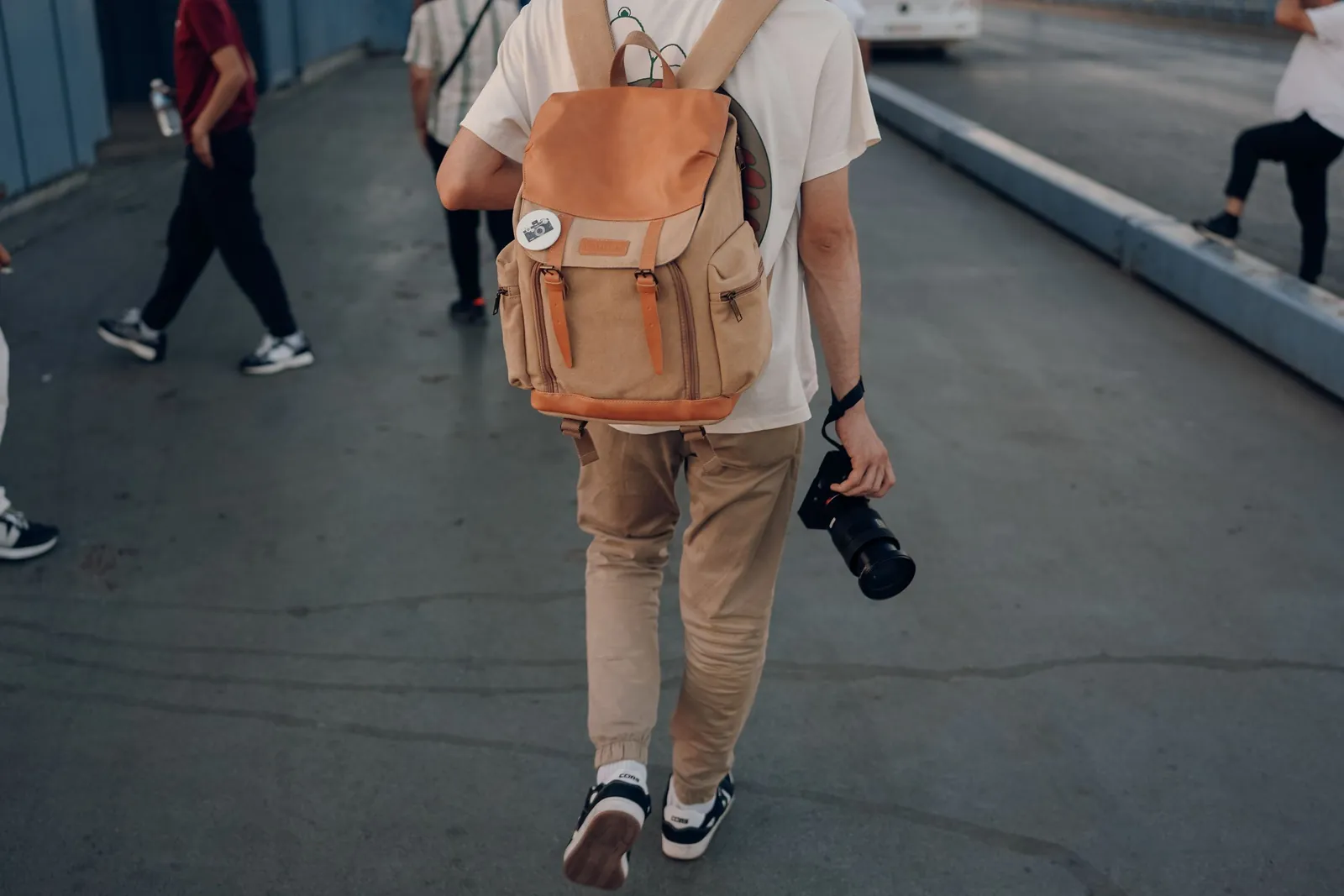
The plane lands, and there are two versions of the next hour. In one, you walk straight off the jet bridge, past the baggage carousel where a crowd is already forming, and out into the city while your bag rides comfortably on your shoulder. In the other, you watch a rubber conveyor for twenty-five minutes, then wrestle a two-week suitcase up a stairwell at a train station that, of course, has no elevator.
The difference between those two hours is not luck, and it is not that some people own less stuff. It is a decision made weeks earlier, at home, before a single shirt went into the bag. This post lays out that decision as a repeatable system: how to pack carry-on only for a full two weeks, and actually enjoy the lightness instead of rationing socks.
Why carry-on only is a planning decision, not a packing trick
Most "how to pack carry on only" advice starts at the suitcase: roll this, fold that, buy these compression cubes. That is the last five percent. People overpack not because of bad folding technique, but because they never decided what the trip needs before they started stuffing.
Carry-on-only travel works because you make a few upstream commitments. You accept a wardrobe that mixes and matches instead of a wardrobe of outfits. You plan to do laundry once. You wear your bulkiest items onto the plane. Get those decisions right and the packing itself becomes almost boring, which is exactly what you want. Get them wrong and no cube on earth will save you.
There is a real payoff beyond smugness at the carousel. Checked bags are one of the quieter ways a trip gets expensive, a point we dug into in our guide to the travel costs that sneak up on you. Skip the checked bag and you skip the fee, the wait, and the small chance your clothes land on a different continent than you do.
Start from the plan, not the closet
Open your itinerary before you open your wardrobe. Every item you pack should be answering a specific question your trip is asking. If nothing in the plan asks for it, it does not come.
Three things decide your packing list:
- Climate. Not the season in the abstract, the actual forecast for your dates and cities. A "two-week Europe trip" in October can mean 70 degrees in Seville and 45 degrees with rain in Amsterdam. Those are different bags, or rather, one bag that layers.
- Activities. Museums and dinners need different things than a two-day hike or a beach stretch. Be honest about how many "nice dinner" nights you actually have. It is usually one or two, not five.
- Culture and setting. Some destinations expect covered shoulders and knees at religious sites. Some cities are cobblestones that will eat delicate shoes. The plan tells you this if you look.
This is the kind of thinking Atlazi's planner does when it turns your trip into a day-by-day, point-of-interest itinerary. When you can see the whole trip laid out, the packing list stops being a guess. You are not imagining "maybe there is a fancy night," you are looking at whether there is one. Build the itinerary first at Atlazi's planner, then pack against it.
The capsule wardrobe math
A capsule wardrobe is a small set of clothes that all work together, so a handful of pieces produce weeks of outfits. The trick is not owning less, it is owning pieces that combine.
The rule that makes it work is color discipline. Pick one neutral base (navy, black, olive, or gray) and let everything sit on top of it. If every bottom goes with every top, five items become fifteen combinations. Pack a red top that only works with one specific pair of pants and you have packed an outfit, not a piece.
Here is a concrete example set for two weeks, roughly:
- 5 to 6 tops. A mix of short and long sleeve, in your base colors plus one or two accents.
- 2 to 3 bottoms. One pair of trousers or jeans, one lighter or more casual pair, and shorts or a skirt if the climate wants them.
- 2 to 3 layers. A light sweater or fleece, a packable rain shell, and one "nicer" layer that dresses an outfit up for dinner or an occasion that asks for it.
- Underwear and socks for about a week, plus a day or two of buffer.
- 2 pairs of shoes maximum. One comfortable walking pair you wear all day, one that is a little nicer or serves a specific purpose (sandals, a light dress shoe).
Notice the theme: layers over bulk. Three thin layers you can combine beat one heavy coat that handles one temperature and swallows half your bag. And notice the underwear count. You are packing for about a week, not two, which brings us to the piece that makes the whole thing fit.
The laundry cadence that makes two weeks fit
Here is the quiet secret of one-bag travel for longer trips: you do laundry once in the middle. That single decision cuts your clothing load roughly in half. Instead of fourteen days of everything, you pack about seven and reset around day six or seven.
You have a few realistic options, from cheapest to most convenient:
- Sink washing. A bit of travel detergent or even shampoo, a sink, and a few hours of drying time handles socks and underwear easily. A universal sink stopper and a length of travel clothesline weigh almost nothing.
- A laundromat. Most cities have them, a full load costs a few dollars in most places, and it is a pleasant hour to sit with a coffee while everything washes.
- A wash-and-fold or hotel service. More expensive, but if you are short on time it hands you a clean bag of clothes with zero effort.
Build the wash into the plan, do not leave it to chance. A slower afternoon on day six, or a longer stay where you are not changing hotels, is your laundry window. When you save a trip in your Atlazi trips, you can see where those slower days fall and pin the laundry stop to one.
Fabrics help too. Merino wool and technical synthetics dry overnight and resist odor far better than cotton, so a sink wash is actually viable.
Toiletries and the liquids rule
Liquids are where carry-on plans quietly fall apart, because the rules are strict and the bottles are heavy. The security limit is, in most places, containers of 100ml (about 3.4oz) each, fitting inside a single roughly one-quart clear bag. Frame that as "typically," because it varies by country and is changing at airports rolling out newer scanners, some of which relax the rule. Check your departure airport before you go.
The way to stay under the limit painlessly is to stop thinking in liquids:
- Go solid. Shampoo bars, solid soap, and even solid sunscreen and toothpaste tabs skip the liquids bag entirely, and a shampoo bar outlasts a bottle by a wide margin.
- Go mini, but reusable. Decant your actual products into small refillable bottles instead of buying travel-size versions of everything. You control the amount and skip the premium for tiny packaging.
- Buy it there. Sunscreen, toothpaste, and shower gel exist in every country. For anything cheap and bulky, buy a small one on arrival rather than flying two weeks of shower gel across an ocean.
Keep prescription medication in your bag in its labeled packaging, and pack a day or two extra in case travel days slip.
Choosing the bag and using the personal item
Your bag is a budget, and airlines set the number. The frustrating truth is that cabin-bag rules vary by airline, and sometimes by fare class within the same airline, so there is no single dimension that is always safe. As a rough guide, many carriers accept a main cabin bag around 55 x 40 x 20cm (roughly 22 x 14 x 9in), but budget airlines are stricter, and some now sell the overhead-bin allowance as an add-on. Verify your airline's limits for your ticket. This is the one number you should never assume.
Then use your personal item deliberately. Most tickets, even strict ones, include a smaller bag that fits under the seat. It carries your electronics, documents, a change of clothes, and anything you want in flight, which frees the main bag for pure wardrobe. Two thoughtfully packed bags hold a startling amount.
A soft-sided bag also squishes into sizers and overhead bins in a way a hard shell will not. And whatever you choose, one liftable bag is the whole point when you are hauling it up stairs. It matters more than you would think on a rail trip, as anyone who has read our Europe by train itinerary and pictured the station staircases already knows.
Wear the bulky items, and the packing method
The plane is free storage you are already carrying. Wear your bulkiest layer, your heaviest shoes, and your jacket onto the flight. Boots and a coat take up a third of a carry-on when packed and zero when worn, and cabins run cold anyway.
For the packing itself, the rolling-versus-cubes debate is less dramatic than the internet makes it:
- Rolling compresses soft items (t-shirts, underwear, knits) well and cuts creasing. A good default for casual clothes.
- Packing cubes do not save space so much as impose order. They make the mid-trip laundry sort trivial, since dirty clothes go back in one cube, and compression cubes can genuinely shrink bulky soft items.
- Structured or wrinkle-prone items (a blazer, a collared shirt) do better folded flat, ideally on top.
Use whichever keeps your bag tidy enough that you can find things without unpacking the whole thing on a hostel bed. That is the real metric.
What NOT to pack
The bag does not fill up with things you need. It fills up with things you might need. The just-in-case pile is the enemy of one-bag travel, and it follows a pattern:
- The "what if it is cold" second coat. One good layering system covers a wide range; the backup coat is dead weight.
- The full shoe collection. Every extra pair is a brick. Two pairs, chosen for your real activities, is plenty.
- "Nice" clothes for occasions you do not have. Pack for the trip you are taking, not the gala it might theoretically include.
- Duplicates, and full-size anything. A fourth pair of jeans, three books you will not open, a bottle of shower gel. Miniaturize or buy on arrival.
A useful test: for every item, ask "what happens if I do not bring this?" If the honest answer is "I buy one for a few dollars" or "nothing," it stays home. Almost everything you forget is purchasable at your destination, and very little of it is worth the guaranteed cost of carrying it every day.
A worked example: two weeks, mixed climate
Picture two weeks across Portugal and then northern Spain in spring: warm and sunny on the coast, cooler and rainier inland, one nice dinner planned, a lot of walking. Into a single 40-liter carry-on and a small backpack:
- Tops: 3 t-shirts, 2 long-sleeve shirts, 1 button-up that works for the dinner. All navy, white, and gray so everything mixes.
- Bottoms: 1 pair of dark jeans, 1 pair of lighter chinos, 1 pair of shorts.
- Layers: 1 merino sweater, 1 packable rain jacket (worn or clipped on), 1 light overshirt for cool evenings.
- Shoes: comfortable walking sneakers (worn on the plane) and one pair of minimal sandals.
- Underwear and socks: 7 to 8 days' worth, refreshed by one laundry stop around day seven in Porto, where the plan has a slower afternoon.
- Toiletries and backpack: shampoo bar, solid soap, one mini refillable bottle, sunscreen bought on arrival; the backpack carries laptop, chargers, documents, a spare shirt, and the rain shell.
That is a comfortable, layered, dinner-ready two weeks that never touches a carousel. The same math scales down: a weekend is firmly carry-on territory, as our 48-hour city break guide assumes from the first line.
Common carry-on-only mistakes
- Packing outfits instead of pieces. If an item only works one way, it is a passenger, not a worker.
- Skipping the laundry plan. Without it, two weeks genuinely does not fit.
- Trusting a generic size chart. Rules vary by airline and fare, so check yours.
- Ignoring the personal item. Half your capacity is under the seat in front of you.
- Overpacking shoes. The single most common weight and space sink.
Frequently asked questions
Can you really pack for two weeks in a carry-on? Yes, and it is more comfortable than dragging a large suitcase. The mechanism is a mix-and-match capsule wardrobe plus one laundry stop around the midpoint, so you pack for about a week rather than fourteen separate days.
What is the carry-on liquids limit? Typically containers of 100ml (about 3.4oz) or less, together in one clear roughly quart-size bag. It varies by country and some airports with newer scanners are relaxing it, so confirm your departure airport's current rule before you fly.
How many outfits should I pack for two weeks? Think in pieces, not outfits. Around 5 to 6 tops, 2 to 3 bottoms, and 2 to 3 layers in a shared color palette produce well over a dozen combinations, which is plenty when you do laundry once.
Is a backpack or a wheeled bag better for one-bag travel? Whichever you can lift onto trains and up stairs. Backpacks win on stairs and cobblestones; wheeled bags win on long smooth airport walks. Both work if they meet your airline's cabin size.
Do carry-on rules really differ that much between airlines? They do, especially with budget carriers, and the allowance can change with your fare class. Check the exact dimensions and weight for your specific ticket rather than assuming a standard.
The lightest way to travel
Carry-on-only travel is not about deprivation, it is about deciding well in advance. Start from the plan, build a capsule that mixes and matches, schedule one laundry stop, wear the bulky things, and leave the just-in-case pile at home. Do that and two weeks fits in one bag with room to spare, and you spend your trip walking past the carousel instead of waiting at it. (Traveling light is also what makes stepping out during a long connection painless, as our long-layover city break guide leans on.)
The part that trips most people up is the planning, because it is hard to pack against a trip you cannot fully see. That is the work Atlazi does for you: a sentence becomes a day-by-day itinerary, so you know exactly what your trip is asking for before you pack a thing. Plan your trip with Atlazi and let the itinerary write your packing list.