
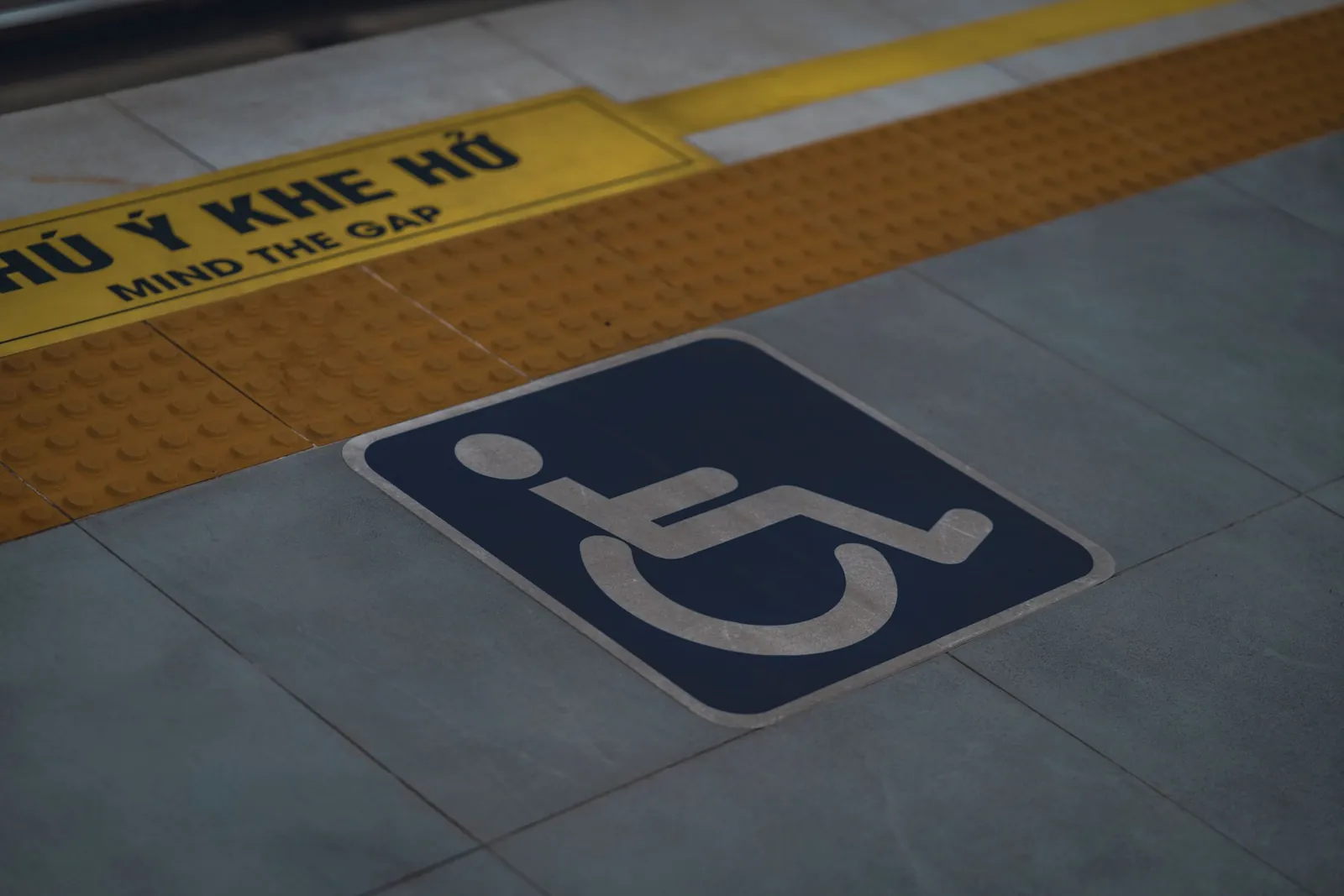
The gap between a trip that works and one that comes apart is rarely the destination. It is the planning. A famous museum with step-free access can still defeat you if the nearest accessible station is a fifteen-minute roll away over broken pavement, and nobody mentioned that in the brochure. The good version of the same day exists too. It just gets built in advance.
If you travel with reduced mobility, or you are planning for someone who does, you already know the standard advice ("just wing it, ask locals") is useless to you. What follows is a planning method: how to define what you actually need, vet places honestly, and build an itinerary with enough slack that a delayed lift or a longer walk doesn't end the day. You are not chasing luck. You are removing the parts where it was ever required.
Start with your own requirements, not the destination
Accessibility is personal. A route that suits a manual wheelchair user with strong arms is different from one for someone on a mobility scooter, and different again for someone who walks but tires after a short distance. There is no single checklist that fits everyone, so the first job is to write down yours. It becomes the yardstick you measure every later decision against.
Be specific and honest, because vague requirements produce vague plans. Get concrete about:
- Step-free routes. Do you need zero steps, or can you manage one or two with a rail? Ramps only, or are lifts required?
- Distance you can cover. How far can you comfortably walk or roll on flat ground before you rest? Put a real number on it, and know how it shrinks on a hot afternoon or day three of a trip.
- Rest frequency. How often do you need to sit, and for how long? A city with plenty of benches is a genuinely different place from one without them.
- Bathroom access. Do you need an accessible toilet with grab rails or transfer space, and how often? This quietly shapes your whole route.
- Surfaces and gradients. Cobblestones, gravel, and steep hills are the difference between a listed "accessible" attraction and one you can actually reach.
- Sensory, cognitive, and medical needs. Crowds and noise, clear signage, a fridge for medication, dietary requirements, a predictable routine. Mobility is the focus here, but access is broader, and the same discipline covers all of it.
When a hotel or tour says "we're accessible," you now have precise questions to hold that claim against.
Choose destinations realistically, without writing places off
Some places are easier than others, and pretending otherwise helps no one. Newer, purpose-built cities and neighborhoods tend to have wide, flat pavements, dropped curbs, lifts as standard, and modern transit. Historic old towns, with their cobbled lanes, hills, and buildings that predate any accessibility code, are genuinely harder.
But "harder" is not "impossible." Plan around terrain rather than cross a city off the list. A hilly historic capital might still have a flat, walkable waterfront district, a museum quarter of modern step-free buildings, and one or two cobbled areas you choose to admire from a taxi window. Browse with terrain in mind, read recent traveler accounts rather than glossy marketing, and use Atlazi's explore view to build a shortlist you then vet properly.
One structural decision does more for reduced-mobility travel than almost anything else: stay in one place and take day trips out, rather than hopping hotels every two nights. Every move is a fresh round of transfers, unfamiliar rooms, and access unknowns, and a single well-chosen base removes most of that. We made the full case for it in the home-base travel guide.
Getting there: flights and airport assistance
Air travel has the most moving parts and the most established support, so use it. A few things worth understanding before you fly, all of which you should confirm with your airline rather than take from any article:
- Request assistance ahead of time. Airlines and airports typically offer help through the terminal, security, and the gate, and onto the aircraft. Book it, then reconfirm a day or two before you travel.
- Know how your equipment is handled. Wheelchairs and scooters are usually carried free of charge, separately from your baggage allowance, but the details (whether you keep your own chair to the gate, how batteries are treated) vary. Ask directly.
- Label and photograph your equipment. Tag it with your contact details and take dated photos of its condition before you hand it over, in case you need to document damage.
- Think about seating. Raise your seating preferences when you book rather than hoping at the gate.
Treat every policy you read as a starting question, not a settled fact. Published information goes stale, and only the airline can confirm what applies to your flight and equipment.
Accommodation: what "accessible" really means
"Accessible room" is one of the least reliable words in travel. Depending on who wrote the listing, it can mean a genuine roll-in shower and step-free entrance, or just a ground-floor room with a wider door and a rail by the toilet. The label tells you almost nothing; the questions you ask tell you everything.
So do not book on the label. Contact the property directly, by email so you have it in writing, and ask about the things your requirements list flagged:
- The entrance. Is the way in genuinely step-free, or is there "just one small step"? One step is a wall to a wheelchair user.
- Lift access. If your room is above ground level, is there a lift, and is it large enough for your equipment? Ask for the internal dimensions.
- The bathroom. Is it a roll-in shower or a step-over bath? Is there a shower chair, grab rails, and transfer space beside the toilet? Ask for measurements, not adjectives.
- Door widths. Give them the width of your wheelchair or scooter and ask them to confirm doorways and bedroom clearance.
- Photos. Ask for real photos of the actual accessible room and bathroom, not the marketing gallery.
If a property answers "measurements?" with "it's fully accessible, don't worry," treat that as information. A place used to guests with access needs answers precisely.
Getting around at the destination
Once you land, the daily reality is transport and distances, researched the same way: specifics over labels.
Public transport is uneven. Some metro and rail systems are largely step-free with lifts and level boarding; others have a handful of accessible stations, a lot of stairs, and a gap between platform and train that a small front wheel can catch. Look up the specific stations you will use, check the operator's official accessibility map, and confirm the lifts are working. A step-free station with its lift out of service is not a step-free station.
Accessible taxis and ride services fill the gaps, but supply varies enormously by city, and in many places you must book a wheelchair-accessible vehicle in advance rather than hail one. Find out before you arrive whether that means an app, a phone number, or a day's notice.
Then be honest about distances. A map makes two sights look like neighbors when they are a slog apart on the ground, especially uphill. Measure the real distance against your own comfortable range, and plan transport for anything beyond it. Underestimating distance is the most common way an accessible day quietly falls apart.
Build a realistic itinerary
This is where planning earns its keep. The instinct is to pack the days full, and for reduced-mobility travel that instinct is the enemy: a schedule with no slack has nowhere to absorb a broken lift or a body that needs an extra half hour, and one delay topples the rest of the day. Build the opposite:
- Fewer stops per day. Two or three well-chosen places you actually enjoy beat six you rush between and remember as exhaustion.
- Generous buffers between everything. Assume transfers take longer than the map says. The buffer is not wasted time. It is why the plan survives a real day.
- Rest built in on purpose. Put real breaks in the schedule as fixed items, not as something you will do "if there's time." A planned coffee stop with a guaranteed accessible bathroom is part of the itinerary, not a luxury.
- Timed tickets to skip queues. Where a venue offers pre-booked entry slots, use them. A timed ticket often comes with a step-free entrance and staff who can help.
- Pace energy across the whole trip. Do not schedule your two most demanding days back to back. Alternate a big day with a gentle one, and treat flight days as their own kind of exertion.
This is ordinary good itinerary-building, applied with more discipline. Our guide to planning a trip itinerary lays out the sequence-and-cluster approach this plan rests on, and the multi-city planning guide covers how to keep the travel-day load from stacking up if you do move between cities.
Confirm access at each place, directly
One pattern runs through everything above: do not trust a single label from a single source. For each place that matters, call or email and describe your actual needs rather than asking the yes-or-no "are you accessible?" Where official information and recent traveler reviews disagree, believe the more specific and more recent one. A ten-minute exchange the week before you travel prevents a surprise no amount of on-the-day cheerfulness can fix.
Packing for access
Your packing list carries a bit more weight on an accessible trip, because some items are not replaceable at the corner shop.
- Documents and prescriptions. Carry copies of prescriptions and a short doctor's note describing your condition and equipment, ideally in the local language too. It smooths medication questions at borders and pharmacies.
- Medication, plus backup. Bring more than the trip length, split across two bags so a lost bag is an annoyance rather than a crisis, and keep essential doses in your carry-on.
- Chargers, spares, and adapters. For a powered wheelchair or scooter, that means the right charger, the right plug adapter, and a spare of anything small that would strand you if it failed.
- A repair contact. Before you go, look up where your equipment can be serviced at your destination and save the number. You probably will not need it, but if you do, you will be glad you looked.
Insurance and medical prep
Travel insurance is not optional here, and the fine print matters more than usual. Declare your conditions honestly when you buy the policy. An undeclared pre-existing condition is the classic reason a claim is refused.
Check specifically that the policy covers your mobility equipment against loss and damage, and that the payout is enough to actually replace a powered wheelchair, which can cost as much as the rest of your trip combined. Keep your insurer's emergency number and policy number somewhere you can reach without unlocking a dead phone.
Tools and resources
Good information sources are worth a habit: official venue and transport-operator accessibility pages, national accessibility bodies, and communities of travelers with similar needs who post specific, recent, honest reviews.
Planning tools help most where the physical cost of a trip is highest, and reduced mobility is exactly that case. A planner that sequences your stops geographically instead of scattering them across town cuts the backtracking that drains energy fastest, and one that factors opening hours keeps you from crossing town to a closed door. Atlazi's planner clusters what is near what and orders your days to reduce doubling back, giving you a structure you then vet against your own requirements. It does not replace confirming access directly. It replaces the guesswork about what order to do things in, so the trip asks less of your body.
For the fuller picture, our accessibility page lays out where the product helps and where you still need to verify for yourself. And because so much of accessible travel depends on staying reachable, to rebook assistance or pull up a live transit map, our travel eSIM guide covers getting data the moment you land.
A worked example: one gentle city day
Here is what the principles look like as an actual plan. It is illustrative; confirm every access detail below directly before relying on it.
- 9:30. Accessible taxi, pre-booked the night before, from the hotel to a large flat park near the water. Start slow and near, not with the hardest thing.
- 10:00 to 11:30. Roll the flat waterfront path, with benches for rest stops and a cafe with a confirmed accessible bathroom as the turnaround point.
- 11:30 to 12:30. Long, unhurried lunch. This is a rest block, not an interruption to one.
- 1:00 to 2:30. A single modern museum on a timed ticket, chosen because you emailed ahead and confirmed a step-free entrance and a lift to every floor. One venue, done properly.
- 2:30 onward. Back to base to rest, with the evening left open. If energy holds, a nearby accessible restaurant. If not, room service and an early night, with no plan ruined because there was nothing rigid to ruin.
Three anchors, wide buffers, rest treated as a fixture, and every access claim checked in advance. That empty space you can see in the day is the plan working.
Frequently asked questions
What does "wheelchair accessible" actually mean in a listing? On its own, very little. It is an unregulated word that can describe a true roll-in bathroom or just a ground-floor room with a wider door. Never book on the label. Email the property, ask for specific measurements and real photos of the actual room, and judge from those.
How far in advance should I request airport assistance? Earlier is better. Book it when you book the flight if you can, and reconfirm a day or two before travel. Also confirm with your airline how your wheelchair or scooter will be handled, since the specifics vary by carrier.
Is it worth visiting historic cities with cobblestones and hills? Often yes, if you plan around the terrain. Base yourself in a flatter, modern district, use accessible transport for the hard stretches, and choose the step-free sights rather than writing the whole place off.
How many things should I schedule in one day? Fewer than you think. Two or three anchor stops with generous buffers and built-in rest beat a packed schedule, because a full day has no slack to absorb a delayed lift, and one delay topples everything after it.
The plan is the accessibility
Accessible travel rewards the traveler who does the homework, because the homework removes the moments where a trip would otherwise depend on luck. Define your own requirements, vet places with precise questions instead of trusting labels, build days with fewer stops and real slack, and confirm access directly. None of it is glamorous, and all of it makes the good version of the day the one that actually happens.
The sequencing part, ordering stops so you double back the least and your energy stretches furthest, is the piece worth handing off. Start your itinerary in Atlazi's planner, then vet it against the requirements only you can define.