Iceland is the rare destination where the month you pick changes the trip more than the hotel, the airline or even the route. Come in December and you get about four hours of soft daylight, glowing ice caves and a real shot at the northern lights. Come in June and the sun barely bothers to set, the highland trails open up and puffins crowd the sea cliffs. Same island, two completely different holidays.
So the best time to visit Iceland is less about the calendar and more about what you came for, how far you plan to drive and what you are willing to pay. This guide walks through every month with the same five facts (weather, daylight, crowds, prices and what each month does best), then helps you choose and shows what a short trip looks like in practice.
Quick answer: For the northern lights, go between late September and March, when nights are long and dark (roughly September to mid-April is the full window). For the midnight sun, puffins and highland hiking, go from mid-June to August. For the best balance of value, daylight and thinner crowds, go in May or September.
The best time to visit Iceland at a glance (by goal)
Before the month-by-month detail, here is how the year breaks down by what most travelers actually want:
- Northern lights: September to mid-April. You need real darkness plus clear skies, so the deep winter months give you the most hours to try, and late September or March pair decent odds with milder roads.
- Midnight sun and long days: Late May to late July. Around the June solstice Reykjavik gets roughly 21 hours of daylight, and even after sunset it never gets fully dark.
- Highland hiking and F-roads: Typically late June or July to early September. Opening dates shift every year with snow, so treat this as a range, not a promise.
- Puffins: Roughly May to mid-August, with June and July the most reliable.
- Ice caves: Typically November to March, on guided tours only.
- Value: May, September and the quieter winter weeks of November, January and early February, avoiding the Christmas and New Year rush.
Iceland month by month
Temperatures below are typical Reykjavik daily lows to highs, based on the Icelandic Met Office's long-term averages. The north and the highlands run colder, and wind makes everything feel colder than the thermometer suggests. Daylight figures are for Reykjavik from the start to the end of each month.
January and February
- Weather: About 29 to 38°F (-2 to 3°C), with frequent storms, sleet and wind.
- Daylight: Roughly 4.5 hours on January 1, growing to about 10 hours by late February.
- Crowds: Low after New Year, picking up in February.
- Prices: Among the lowest of the year once the holiday week is over.
- Best for: Northern lights, ice caves, snowy waterfalls and hot springs in the dark.
- Watch out for: Road closures. Plan short driving days with slack built in.
These months reward flexibility: base yourself in one place and pick day trips around the forecast.
March
- Weather: About 30 to 40°F (-1 to 4°C), still wintry, especially in the north.
- Daylight: Roughly 10 to 13 hours, close to an even split by the equinox.
- Crowds: Moderate, with a bump around Easter.
- Prices: Mid-range.
- Best for: Northern lights with more usable daytime, late-season ice caves, winter scenery without the shortest days.
- Watch out for: Late snowstorms. March can still close mountain passes.
March is underrated: dark nights for aurora, with far more daylight for driving than December.
April
- Weather: About 34 to 44°F (1 to 7°C), changeable, with snow still possible.
- Daylight: Roughly 13.5 to 16.5 hours.
- Crowds: Low to moderate, Easter aside.
- Prices: Mid-range, often good value outside the holidays.
- Best for: Quiet sightseeing, the last chance of northern lights early in the month, the first returning birds.
- Watch out for: Mud and slush on hiking paths, and the highland roads are still closed.
May
- Weather: About 39 to 50°F (4 to 10°C), and on average the sunniest month in Reykjavik.
- Daylight: Roughly 17 to 20 hours.
- Crowds: Moderate, growing toward June.
- Prices: Shoulder-season, noticeably below July and August.
- Best for: Long days at lower prices, the start of puffin season, the south coast and the Golden Circle with room to breathe.
- Watch out for: The highlands and many interior trails are not open yet. Some seasonal guesthouses and tours start late in the month.
May is one of two sweet spots in the Icelandic calendar. You get near-endless daylight without peak-summer rates, which is exactly the trade-off that makes shoulder season travel worth it in so many places.
June
- Weather: About 45 to 55°F (7 to 13°C).
- Daylight: Roughly 20 to 21 hours. In Reykjavik the sun dips below the horizon for a few hours around the solstice, but the sky stays bright all night.
- Crowds: Busy, building quickly toward July.
- Prices: High.
- Best for: Midnight sun, puffins, whale watching, late-night drives with golden light.
- Watch out for: Sleep. Bring an eye mask, because many rooms have thin curtains and the light never quits. Highland roads may still be closed in the first half of the month.
July and August
- Weather: About 47 to 59°F (8 to 15°C), the warmest it gets, which is still jacket weather.
- Daylight: Roughly 21 hours in early July, shrinking to about 14.5 hours by late August.
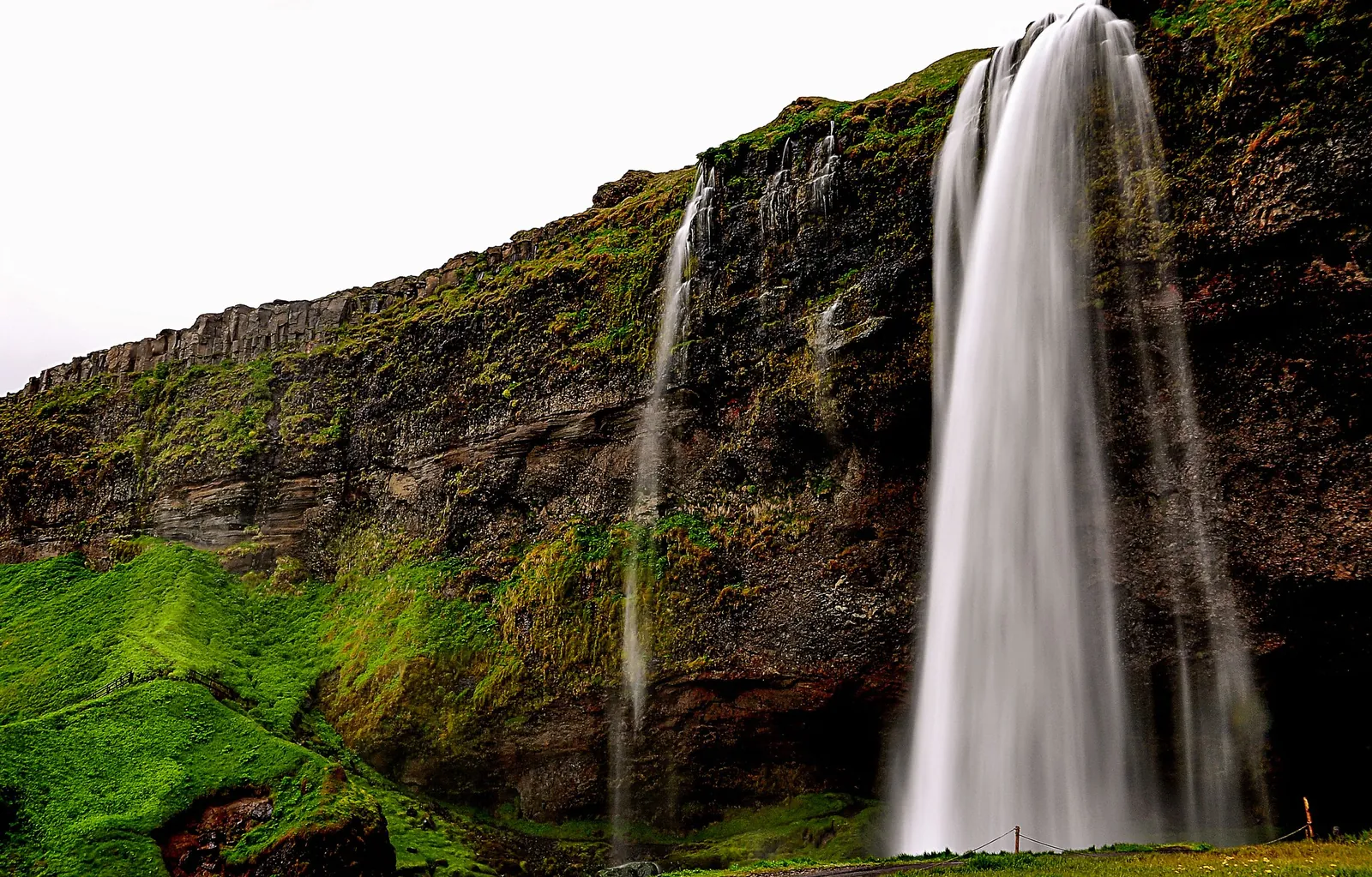
- Crowds: Peak. Popular stops like Seljalandsfoss, Skógafoss and Jökulsárlón are busy most of the day.
- Prices: The highest of the year for cars, stays and tours.
- Best for: Highland hiking (Landmannalaugar, the Laugavegur trail), F-road trips, puffins, whale watching from Reykjavik or Húsavík, the full Ring Road.
- Watch out for: Sold-out rental cars and countryside stays if you book late. Puffins start leaving their colonies from around mid-August.
The highland F-roads are what make these months unique. They typically open somewhere between mid-June and early July, depending on how much snow fell over winter, and close again by around September. You need a 4x4, and rental agreements generally ban regular cars on them. Check road.is (or umferdin.is) for the current year's opening status before you build a route around one.
September
- Weather: About 43 to 52°F (6 to 11°C), with more rain and wind as the month goes on.
- Daylight: Roughly 14.5 hours at the start, down to about 11 hours by the end.
- Crowds: Dropping fast after the first week or two.
- Prices: Shoulder-season, easing as the month goes on.
- Best for: The first real northern lights chances, autumn colors, road trips with summer access and fewer people.
- Watch out for: Highland roads closing again, sometimes early if snow arrives. Some seasonal tours wind down.
September is the other sweet spot, and for many travelers it is the single best month. You still have long enough days for a proper south coast drive, the summer roads are mostly open, prices start to slide, and by evening it is finally dark enough to look for the aurora.
October
- Weather: About 37 to 46°F (3 to 8°C), wet and windy.
- Daylight: Roughly 11 hours at the start, about 8 hours by the end.
- Crowds: Low to moderate.
- Prices: Mid-range, with good deals on stays.
- Best for: Northern lights with workable driving days, moody autumn landscapes, hot pools in cold air.
- Watch out for: The first winter storms and early snow in the north and east.
November
- Weather: About 32 to 41°F (0 to 5°C).
- Daylight: Roughly 7.5 hours, falling to about 5 hours by month's end.
- Crowds: Low.
- Prices: Among the lowest of the year.
- Best for: The start of ice cave season, long aurora nights, budget winter trips.
- Watch out for: Short days that make long drives tiring, and winter conditions that can arrive suddenly.
December
- Weather: About 29 to 38°F (-2 to 3°C).
- Daylight: Roughly 4 to 5 hours, the shortest of the year around the solstice.
- Crowds: Low in early December, busy over Christmas and New Year.
- Prices: Moderate early in the month, very high over the holidays.
- Best for: Christmas lights in Reykjavik, the famous New Year's Eve fireworks, ice caves, aurora.
- Watch out for: Holiday closures on certain days and the tightest driving windows of the year.
Winter driving: the reality check
The Ring Road (Route 1) is cleared in winter, but storms still close sections, especially in the north and east, and conditions change within hours. Before every winter driving day, check three sites: road.is for road conditions and closures, vedur.is for weather warnings, and safetravel.is for current alerts. If you are not comfortable driving on ice in high wind, a winter trip based in one or two towns with guided day tours is a perfectly good plan. Glacier hikes and ice caves should always be done with a certified guide, since crevasses and cave stability are not something to judge on your own.
How to choose your month
If you are still undecided, start with the one thing you would be most disappointed to miss:
- "I want the northern lights." Go between late September and March. Pick a stay of at least four or five nights so a few cloudy evenings do not wipe out your chances, and favor late September, October or March if you also want comfortable driving.
- "I want to hike and see the highlands." Go from July to early August, and book early.
- "I want puffins and endless daylight." Go in June, or late May for lower prices with a slightly smaller puffin presence.
- "I want the Ring Road." Go between June and early September. A winter Ring Road is possible but only with spare days for weather.
- "I want the best value." Go in May or September for long days, or in November, January or early February if you are happy with short days and a city base.
If your dates are flexible and you are torn between Iceland and somewhere else entirely, Atlazi's destination ideas rank options by season, budget and trip style, which is a quick way to sanity-check whether Iceland in your month beats the alternatives.
A sample 4-day plan for September
This outline uses Reykjavik as a base for the first night and the south coast for the rest. Drive times are approximate and assume good conditions, so add margin if the forecast turns. If you are planning around the capital, our Reykjavik destination guide covers the city's main sights and local weather.
Day 1: Golden Circle loop
- Reykjavik to Thingvellir National Park: roughly 45 minutes.
- Thingvellir to the Geysir geothermal area (Strokkur erupts every few minutes): roughly 1 hour.
- Geysir to Gullfoss: roughly 10 minutes.
- Gullfoss back to Reykjavik: roughly 1 hour 45 minutes. After dark, check the cloud forecast for a first aurora attempt outside the city lights.
Day 2: South coast waterfalls and black sand
- Reykjavik to Seljalandsfoss: roughly 1 hour 45 minutes to 2 hours.
- Seljalandsfoss to Skógafoss: roughly 30 minutes.
- Skógafoss to Reynisfjara black sand beach: roughly 35 to 40 minutes. Stay well back from the waterline, since sneaker waves here are genuinely dangerous.
- Overnight in or near Vík.
Day 3: Canyon and glacier lagoon
- Vík to Fjaðrárgljúfur canyon: roughly 1 hour.
- On to Skaftafell for a short hike toward Svartifoss: roughly 1 hour.
- Skaftafell to Jökulsárlón glacier lagoon and Diamond Beach: roughly 45 minutes.
- Overnight near the lagoon or back toward Kirkjubæjarklaustur.
Day 4: The long drive back
- Jökulsárlón to Reykjavik is roughly 5 hours without stops, so leave early and break it up with a hot pool or a second look at a waterfall you rushed past. Keflavík airport is roughly another 45 minutes beyond Reykjavik.
This is where a planner earns its keep. In Atlazi you can describe this trip in one sentence and get a day-by-day plan with real stops, ordered sensibly with estimated travel time between them, then edit any day by hand. Its Trip Risk heads-ups flag things like a washout forecast for your dates, which in Iceland can be the difference between swapping two days and losing one.
Planning a trip to Iceland: booking timeline
Knowing how to plan a trip to Iceland is mostly about booking the scarce things first. Here is a rough timeline:
- Peak summer (June to August): Book your rental car and countryside stays several months ahead, ideally as soon as your flights are set. Automatic cars, 4x4s and small guesthouses along the south coast and around Mývatn tend to go first.
- Shoulder season (May, September): A couple of months ahead is usually enough, though popular stays near Vík and Jökulsárlón still fill on weekends.
- Winter: Book ice cave and glacier tours a few weeks ahead, but choose operators with flexible rebooking, because weather cancellations are common.
- Christmas and New Year: Treat it like peak summer. Reykjavik hotels fill early and prices climb.
- Any season: Leave a buffer day before your flight home. Storms, closed roads and cancelled tours are part of the Iceland deal, and a spare day keeps them from becoming a missed flight.
Frequently asked questions
What is the cheapest month to visit Iceland? Typically November, January and early February, outside the holiday weeks. May and September are the best value if you also want long days.
What is the best month to see the northern lights in Iceland? Any month from late September to March can work, since the season runs roughly September to mid-April. What matters most is a dark, clear night, so book several nights and stay flexible rather than chasing one perfect date.
When can you drive the highland F-roads? Usually from somewhere in late June or July until early September, but opening dates change every year with snow. Check road.is or umferdin.is close to your trip, and only drive them in a 4x4.
Is Iceland worth visiting in winter? Yes, if you want aurora, ice caves and fewer crowds, and you accept short days and possible road closures. A city or south coast base with flexible day trips works better than a tight Ring Road loop.
How many days do you need in Iceland? Four days covers Reykjavik, the Golden Circle and part of the south coast. Seven to ten days lets you circle the Ring Road in summer at a comfortable pace.
Pick your month, then plan the days
The right month for Iceland comes down to one honest question: are you chasing darkness, daylight or a deal? Once that is settled, the harder part is turning a list of waterfalls and lagoons into days that actually fit, with realistic drive times and room for the weather to misbehave. If you want a head start, start planning your Iceland trip with Atlazi: one sentence gives you a day-by-day plan you can reshape until it matches the month you picked.