Vientiane is a calm, low-rise capital where Buddhist temples, French-influenced architecture, and broad riverside promenades shape the city. Explore the old centre at an unhurried pace, then settle into a local restaurant or café as the Mekong light softens in the evening.
The cooler, drier months from November through February are generally the most comfortable for walking and sightseeing. March and April can be hot, while the rainy season brings humid days and occasional heavy showers, balanced by greener scenery and fewer visitors.
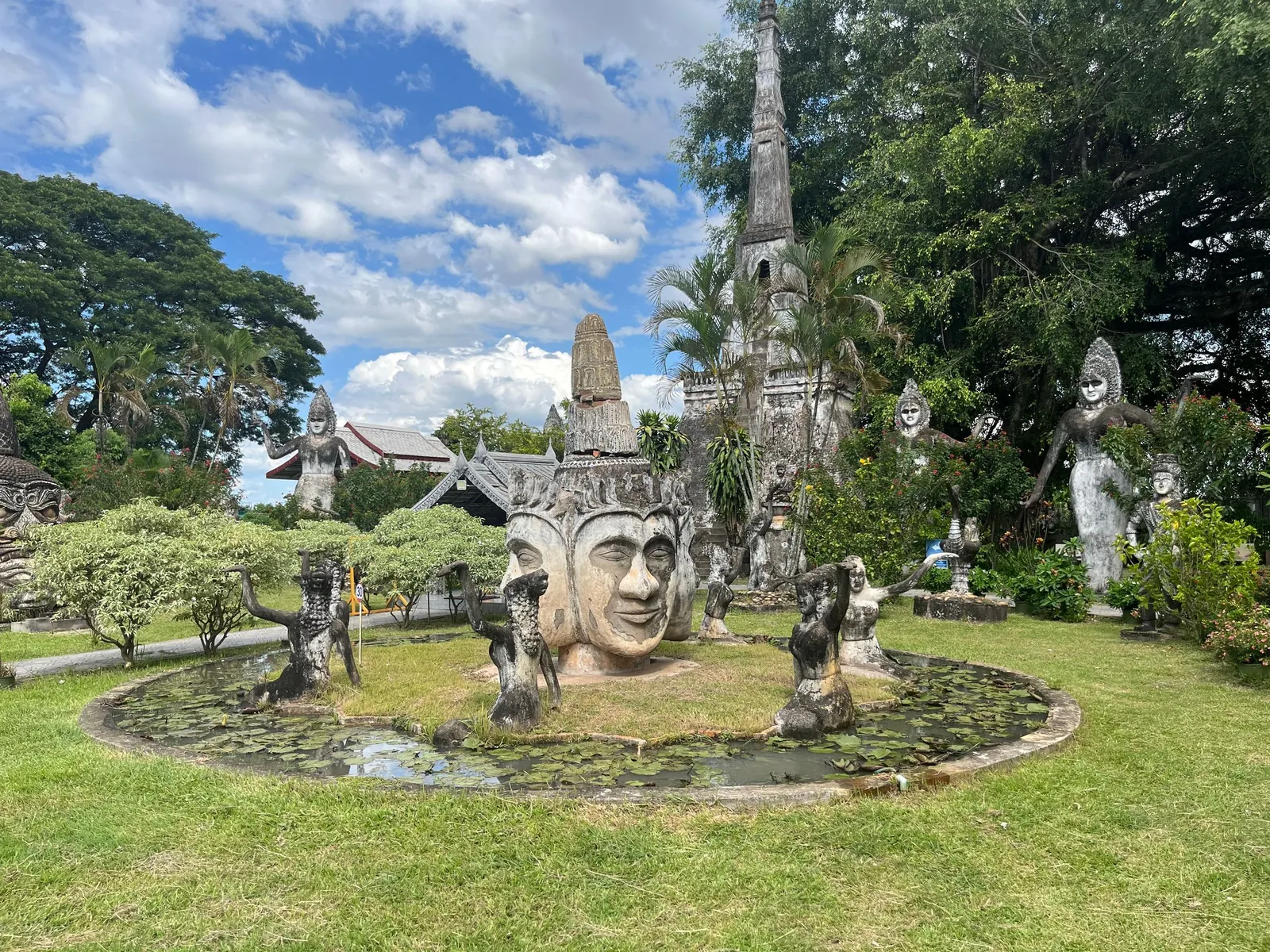
Visit Pha That Luang, Laos's best-known national monument, and explore the ornate murals and roofs of Wat Si Saket. See the Patuxai monument, browse the morning market, and walk or cycle along the Mekong at sunset. Buddha Park, outside the central area, makes a rewarding half-day trip for its unusual religious sculptures.
The central districts around the Mekong, Nam Phou, and the old quarter are convenient for temples, restaurants, cafés, and evening walks. Choose a riverside stay for atmosphere, a central guesthouse for value, or a quieter boutique hotel slightly away from the main tourist streets.
Vientiane can suit a range of travel styles. Local noodle shops and markets keep daily costs modest, while cafés, international restaurants, and boutique hotels raise the total. Carry some Lao kip for small purchases, and confirm whether a business accepts cards before ordering.
The centre is manageable on foot, especially in the cooler hours, and bicycles can be practical for nearby temples and markets. Tuk-tuks and taxis are useful for longer trips, including Buddha Park. Agree on a fare before a tuk-tuk ride, and allow extra time for traffic and weather.
Vientiane is generally relaxed for visitors, but ordinary precautions still matter. Keep phones and wallets secure in busy markets, take care on roads when walking or cycling, and use extra care after dark near quiet riverfront stretches. For current advice, check official travel guidance before departure.