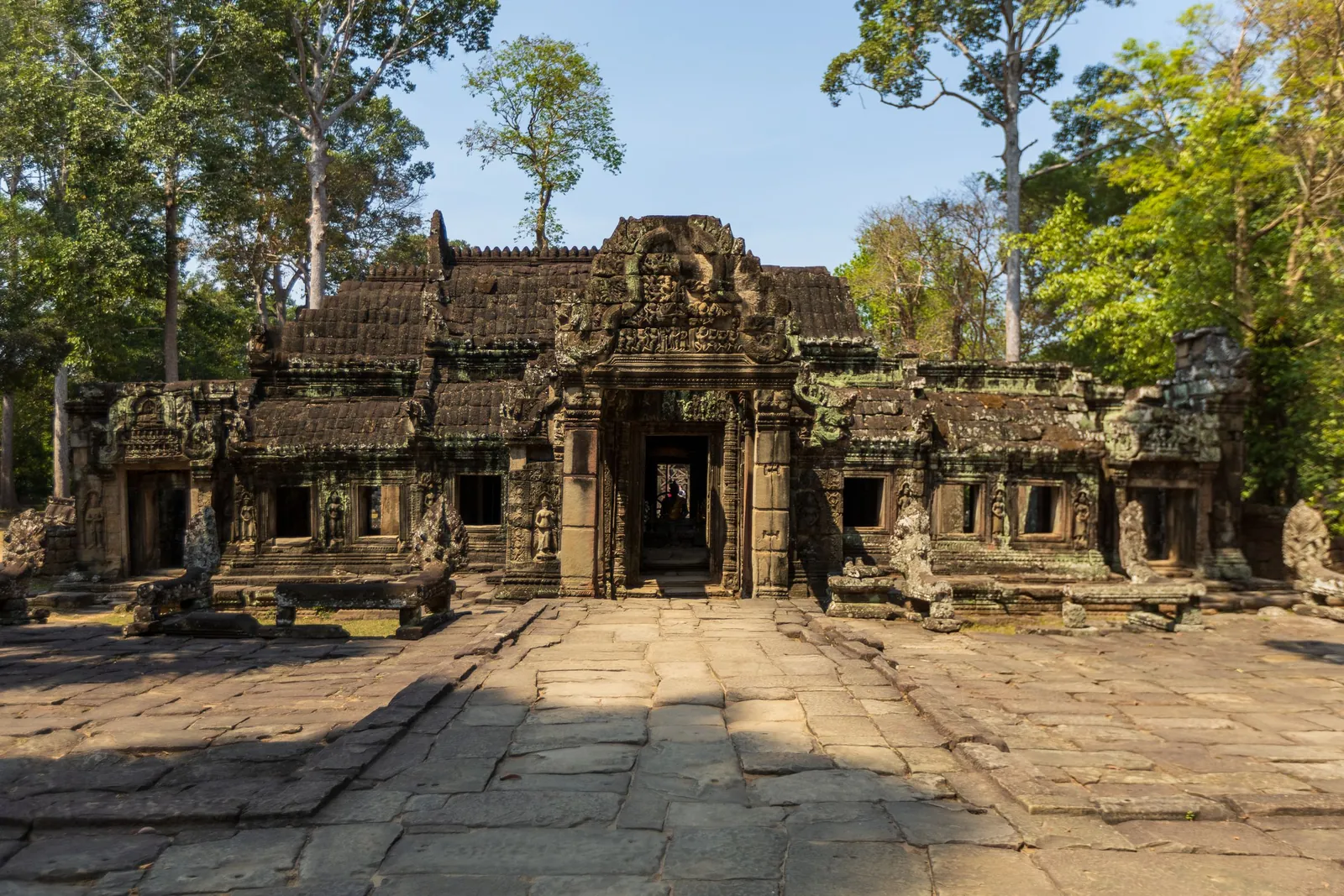
Siem Reap is the main base for exploring Angkor, the vast temple complex outside the city. Days can begin among jungle-framed ruins and end with Khmer food, craft markets, and a walk beside the Siem Reap River.
December through February usually brings the most comfortable conditions for long temple visits, with relatively dry weather and cooler mornings. March and November can be good shoulder-season choices, while the wet season brings greener landscapes, occasional heavy showers, and fewer visitors.
Spend at least a full day exploring Angkor Wat, Bayon, Ta Prohm, and the surrounding temple circuit. Add a sunset or countryside excursion, visit the Angkor National Museum, and make time for Khmer cooking, traditional dance, or the city's food and artisan markets.
The Old Market and Pub Street area is convenient for restaurants, nightlife, and first-time sightseeing. Riverside neighborhoods offer a calmer setting, while Wat Bo and the eastern side of town have boutique hotels, guesthouses, and a more local evening atmosphere.
Siem Reap can suit a wide range of budgets, from simple guesthouses and local noodle shops to polished hotels and destination restaurants. Plan separately for Angkor admission, guide or driver fees, and transport to temples beyond the main circuit. Prices and accepted payment methods can vary, so carrying some Cambodian riel is useful.
Tuk-tuks are the easiest way to move around town and arrange temple days, often with a driver for several hours. Bicycles work well for shorter distances if you are comfortable with the heat, while hotel cars and licensed guides are useful for longer excursions.
Siem Reap is a well-established visitor destination, but petty theft can occur in crowded markets, on busy streets, and around nightlife areas. Protect valuables, use reputable transport, take care on poorly lit roads, and follow local guidance at temples, especially in hot weather.