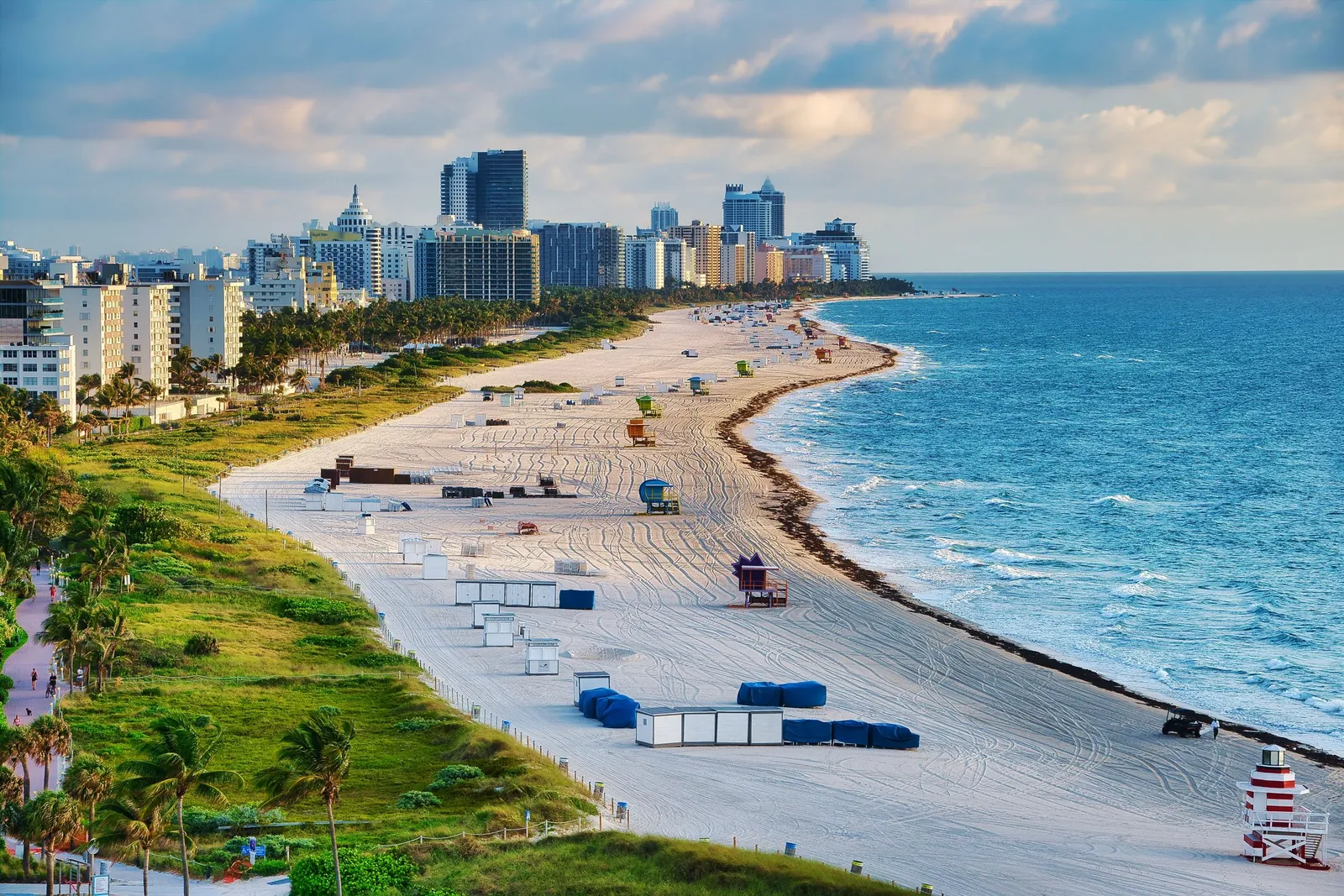
Miami pairs Atlantic beaches with a diverse, energetic city shaped by Caribbean and Latin American influences. Explore Art Deco architecture in South Beach, murals and galleries in Wynwood, and Cuban cafes and music along Calle Ocho in Little Havana.
The cooler, drier months from December through April are popular for beach days, outdoor dining, and city sightseeing. Late spring and summer are warmer and more humid, with a greater chance of heavy rain, while the Atlantic hurricane season calls for flexible plans and travel insurance.
Walk the Art Deco Historic District, relax on Miami Beach, and take in Biscayne Bay from a waterfront park. Add a museum visit, a Wynwood art walk, a meal in Little Havana, or a day trip toward the Everglades for a broader view of South Florida.
South Beach suits travelers who want easy access to the beach, nightlife, and Art Deco landmarks. Downtown and Brickell offer restaurants, skyline views, and transit connections, while Coconut Grove and Coral Gables provide a greener, more residential atmosphere.
Miami can suit different budgets, although beachfront lodging, dining, and major events often raise costs. Save by staying outside the busiest beach areas, using public transit for selected trips, and mixing casual Cuban or Latin American meals with a smaller number of upscale experiences.
Miami is spread out, so choose your base around the neighborhoods you plan to visit. The Metrorail and Metromover are useful for parts of the mainland, buses cover more ground, and rideshares are convenient for cross-city trips. Walking works well within beachside and neighborhood districts, but heat and traffic can make longer journeys less comfortable.
Miami is generally manageable for visitors who use normal city precautions. Keep valuables out of sight, stay aware in crowded nightlife and beach areas, and use licensed transport or reputable rideshares. Take heat, strong sun, thunderstorms, and changing coastal conditions seriously.