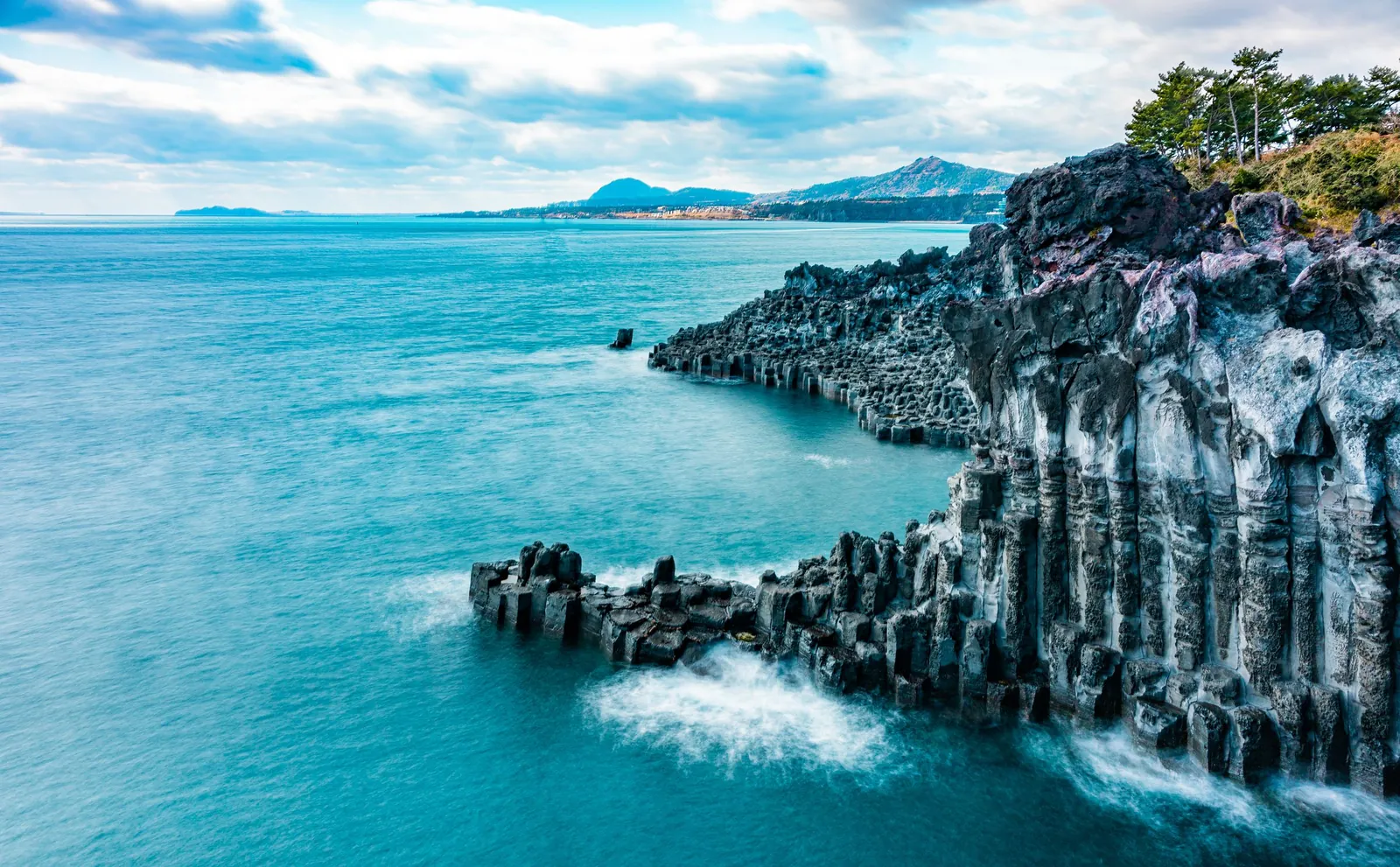
Jeju is a volcanic island known for dark-lava coastlines, forested slopes, citrus orchards, and seafood markets. Jeju City is the main arrival point, while Seogwipo and smaller coastal villages offer a slower base for exploring waterfalls, beaches, and walking trails.
Spring and autumn usually offer comfortable conditions for coastal walks, sightseeing, and Hallasan outings. Summer brings warmer beach weather but can be humid and affected by rain or typhoons. Winter is quieter and often crisp, though strong winds can change outdoor plans.
Walk part of the Olle Trail, visit Seongsan Ilchulbong, and explore lava formations along the coast. Set aside time for Hallasan National Park, a waterfall near Seogwipo, a traditional market, and one of Jeju's haenyeo, or women divers, cultural sites.
Jeju City is convenient for airport access, restaurants, and a first or final night on the island. Seogwipo works well for waterfalls, southern coast scenery, and a relaxed atmosphere. Choose an eastern or western coastal base if your priority is beach time, rural landscapes, or a particular trail area.
Travel costs vary with accommodation, car rental, and how often you dine at seafood restaurants. Budget travelers can use local eateries, buses, and simple guesthouses, while a mid-range trip typically combines comfortable lodging with occasional car hire. Reserve popular stays and vehicles early during holidays and peak summer.
A rental car is the most flexible option for reaching beaches, trailheads, and rural attractions, especially outside the main towns. Buses connect major areas but can make a full-island itinerary slower. Taxis are useful for short trips, and navigation apps with English support can help with planning.
Jeju is generally considered a comfortable destination for visitors. Take care on volcanic paths, coastal rocks, and mountain trails, where wind and weather can change quickly. If driving, allow extra time on unfamiliar roads and check local conditions before hiking or swimming.