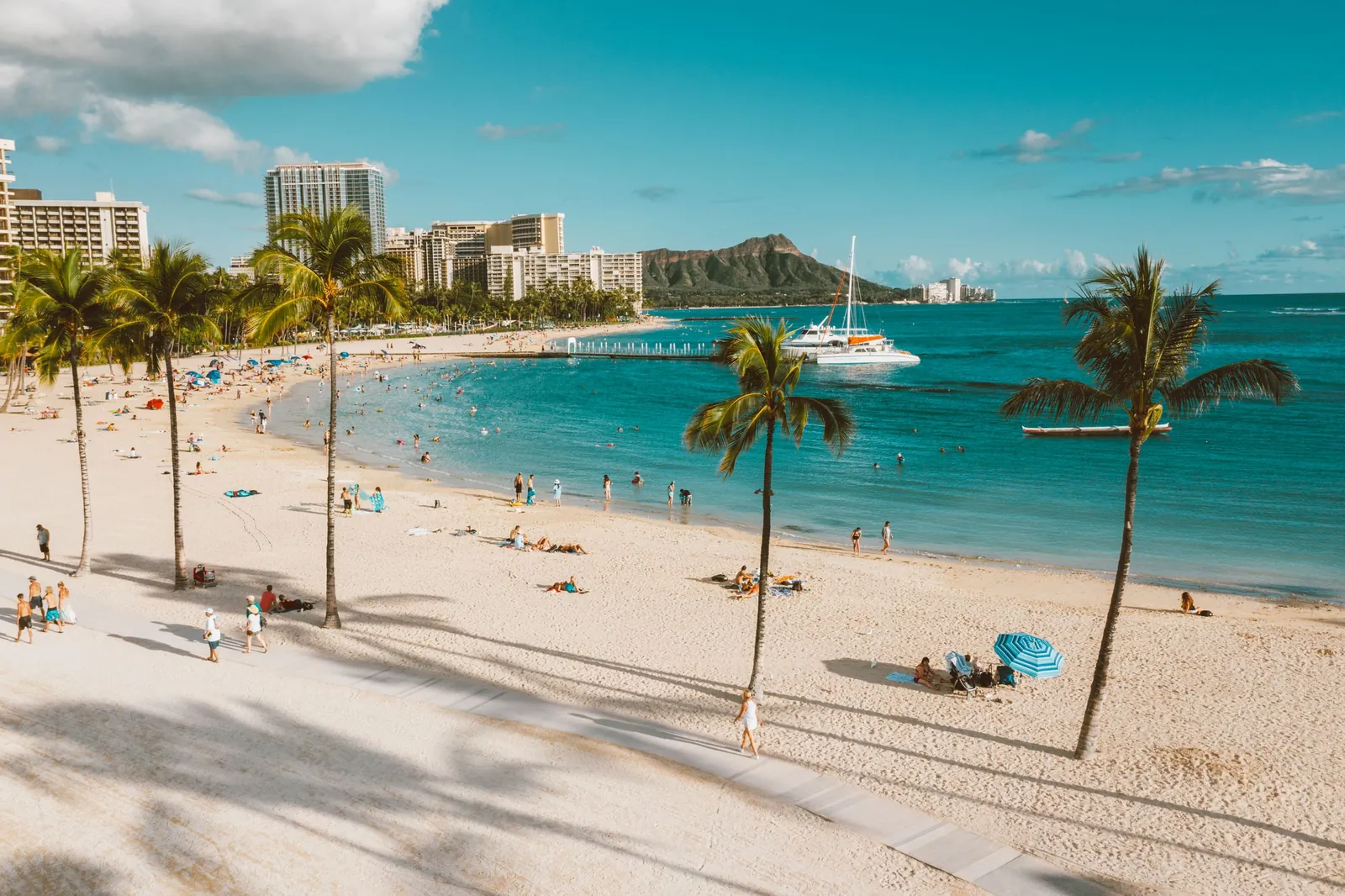
Honolulu combines Waikiki’s broad beach, the slopes of Diamond Head, and neighborhoods shaped by Native Hawaiian, Asian, and Pacific influences. Use the city as a comfortable base for Oahu’s viewpoints, trails, historic sites, and ocean activities.
Honolulu is warm year-round, with generally drier conditions in late spring and summer. Winter can bring larger surf and occasional rain, while spring and autumn often offer a good balance of comfortable weather and lighter visitor numbers.
Swim or surf at Waikiki, hike toward the summit of Diamond Head, and visit Iolani Palace and the Bishop Museum for a deeper sense of Hawaii’s history. Set aside time for neighborhoods such as Kakaako and Chinatown, and consider a day trip along Oahu’s windward coast.
Waikiki is convenient for beaches, restaurants, and first-time visits, though it is busy and often pricier. Ala Moana and Kakaako offer shopping, dining, and a more urban feel, while quieter residential areas can work well for travelers prioritizing space and local atmosphere.
Honolulu is one of the more expensive US island destinations. Save by choosing a simple room, using local buses, mixing restaurants with markets or casual plate-lunch spots, and booking popular activities ahead of time. Resort fees, parking, and car rental costs can add substantially to the daily total.
TheBus connects Honolulu with Waikiki, the airport, and much of Oahu at a relatively low cost. Walking works well in central Waikiki and parts of downtown, but a rental car is useful for beaches, trails, and scenic stops outside the city. Parking and traffic can be challenging, especially at popular sites.
Honolulu is generally manageable for visitors who take ordinary precautions. Keep valuables secure at beaches and in cars, stay aware in crowded nightlife areas, follow ocean warnings, and take care on exposed trails. Weather, surf, and steep terrain can create more immediate risks than city crime.