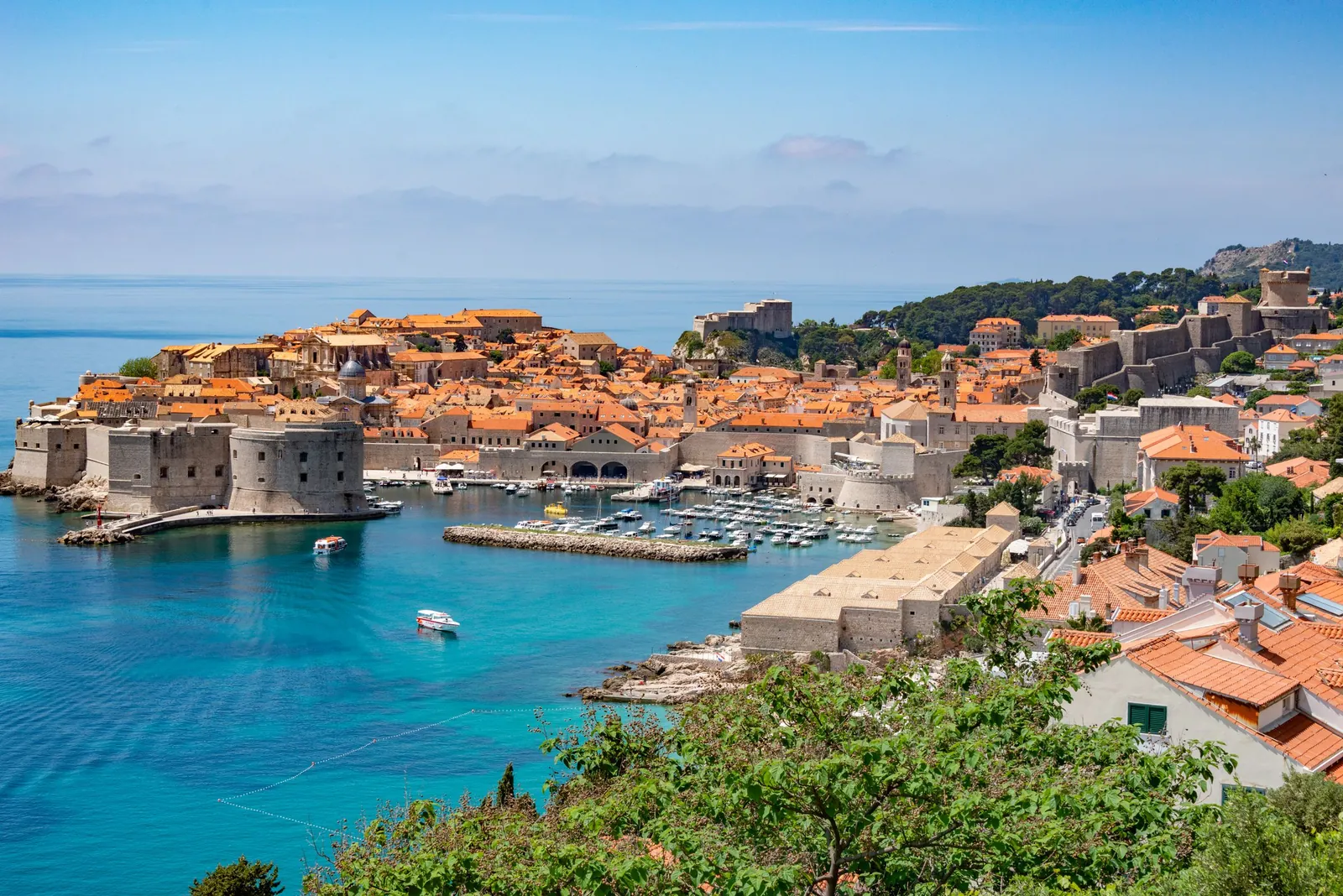
Dubrovnik is a compact Adriatic destination known for its medieval Old Town, sea-facing fortifications, and bright limestone streets. Walk the city walls for sweeping views, then explore quiet lanes, historic churches, and small squares at a slower pace.
Late spring and early autumn offer a comfortable mix of warm weather, open attractions, and fewer visitors than the peak summer months. July and August are lively and sunny but can feel crowded, especially when cruise ships arrive.
Circle the Old Town on the city walls, visit Fort Lovrijenac, and take the cable car for a broad view over the rooftops and Adriatic. Boat trips to Lokrum Island, sea kayaking, and evening walks along Stradun add variety beyond the main landmarks.
Stay inside or just outside the Old Town for historic atmosphere and easy access to major sights. Pile and Ploce are convenient for walking, while Lapad and Babin Kuk offer more space, beaches, and a quieter base with local buses into the centre.
Dubrovnik is among Croatia's more expensive destinations, particularly in summer and around the Old Town. Travelers on a tighter budget can stay outside the centre, eat at casual bakeries or konobas, and book popular excursions early. A mid-range daily plan generally covers a comfortable room, meals, local transport, and selected attractions.
The Old Town is pedestrian-only and best explored on foot, with steep steps in several lanes. Local buses connect the historic centre with residential and beach areas, while taxis and boats are useful for longer transfers and island excursions.
Dubrovnik is generally comfortable for visitors, though crowded streets and transport hubs can attract petty theft. Wear sturdy shoes on polished stone and steep steps, take care near the waterfront, and use licensed transport providers.