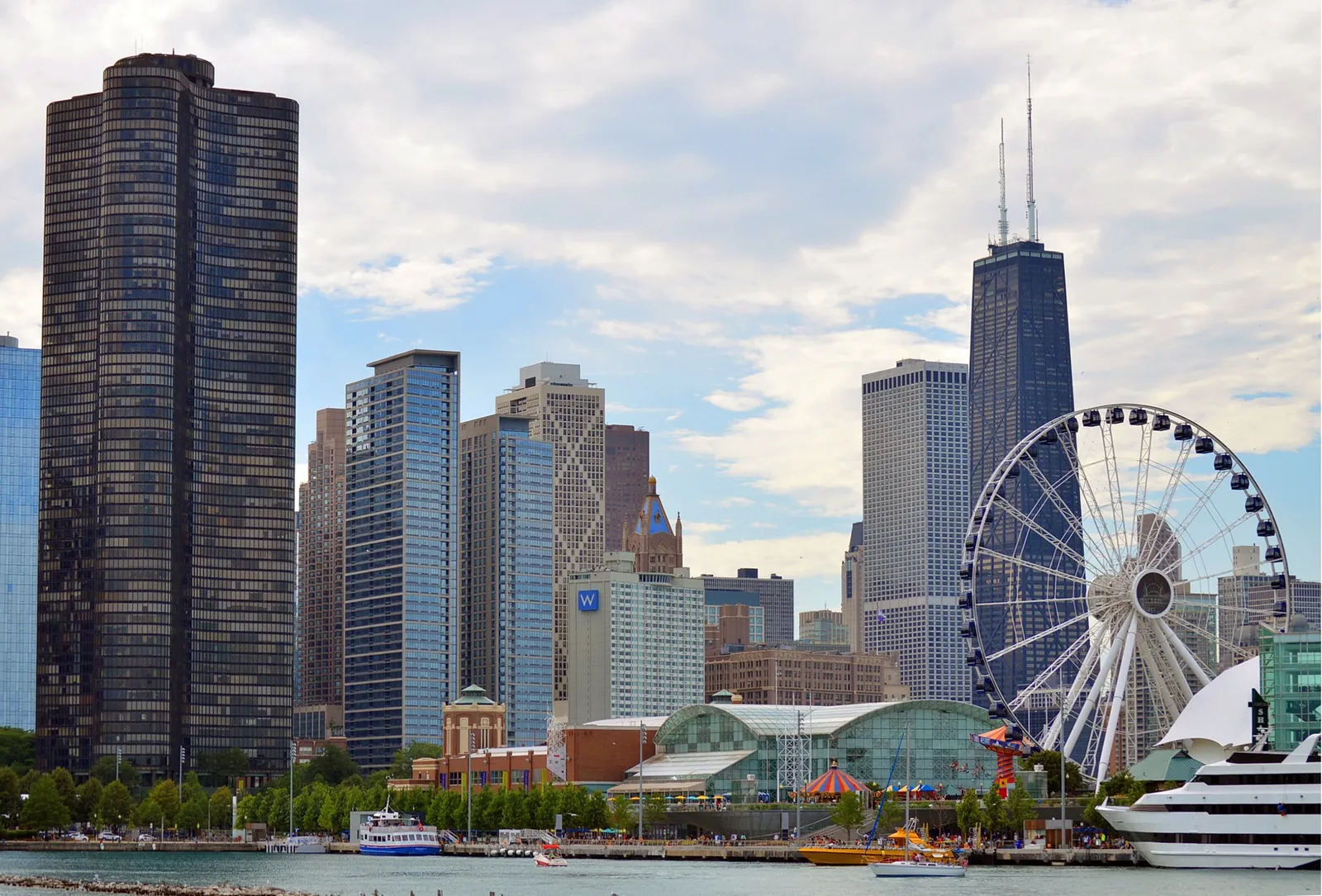
Chicago pairs bold architecture with a deep-rooted music and food culture, all set beside the broad shoreline of Lake Michigan. Explore the Loop, browse neighborhood restaurants, and leave time for the lakefront parks and beaches.
Late spring through early fall brings the most comfortable weather for walking, outdoor dining, lakefront paths, and festivals. July and August are lively but can be hot and busy. Winters are cold and windy, while spring and fall offer cooler temperatures and a more relaxed pace.
Take an architecture cruise along the Chicago River, see the city from the Art Institute of Chicago, and stroll through Millennium Park. Walk or cycle the Lakefront Trail, catch live blues or jazz, and explore neighborhoods such as Pilsen, Wicker Park, Logan Square, and Hyde Park.
The Loop is convenient for architecture, museums, theaters, and major rail connections. River North and Streeterville put you near restaurants and central attractions, while Wicker Park, Logan Square, and Andersonville offer a more neighborhood-focused stay with cafes, bars, and independent shops.
A budget trip can work with a simple hotel or hostel, public transit, casual meals, and free attractions. Mid-range travelers can add a central hotel, architecture tours, and a few sit-down dinners. Prices rise during summer weekends, major conventions, and festival periods, so booking ahead can help.
The CTA train and bus network covers most visitor routes, including direct rail service between the airports and central areas. Walking works well within neighborhoods, and ride-hailing or taxis help when distances are longer. Cycling is practical along the lakefront and on protected neighborhood routes, though winter conditions can be challenging.
Chicago is manageable for visitors who use normal big-city precautions. Keep valuables secure on crowded trains and around busy attractions, stay aware of your surroundings at night, and choose well-used routes. Conditions vary by neighborhood, so ask local staff for current practical advice.