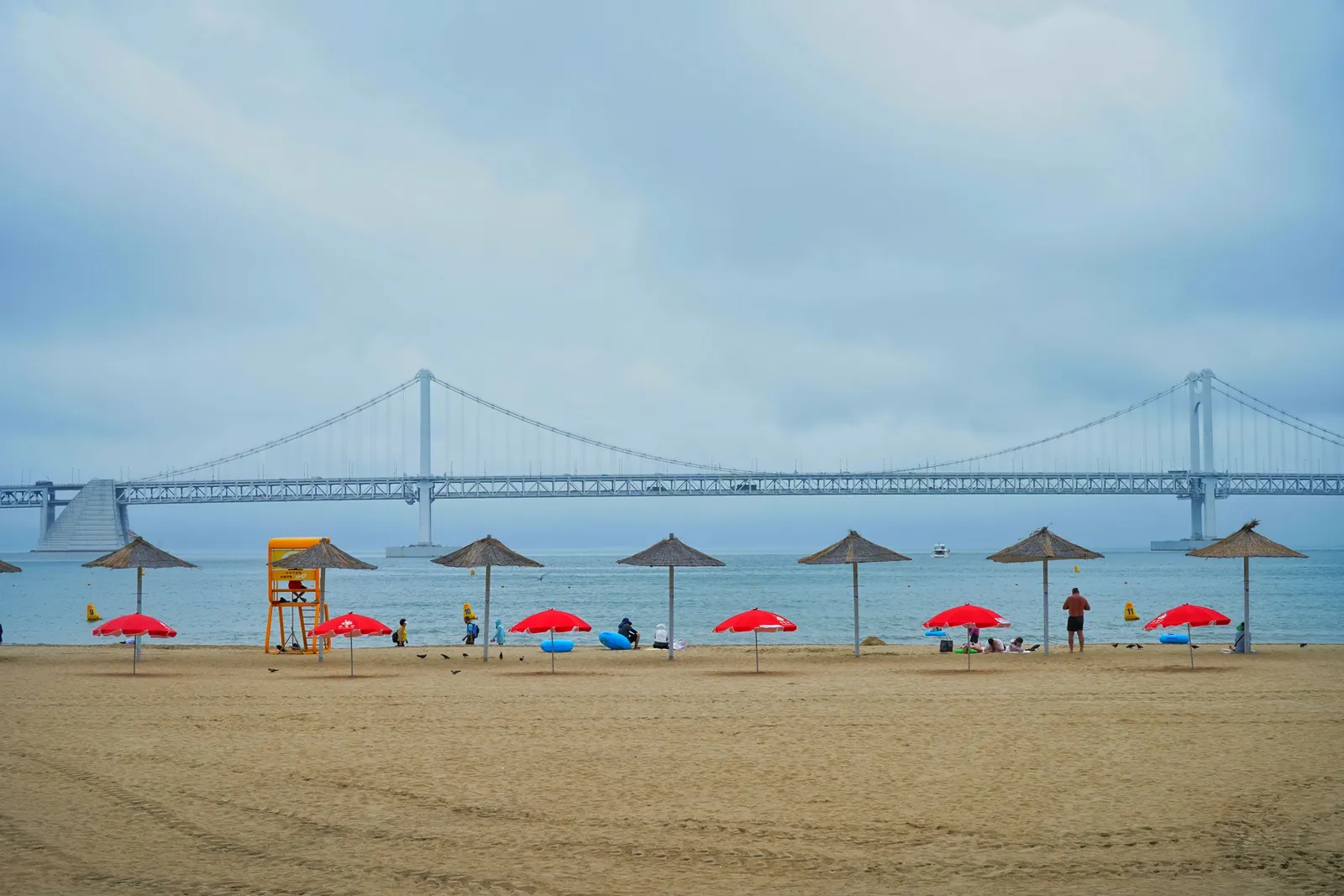
Busan combines a relaxed seaside atmosphere with the energy of Korea's second-largest city. Explore colorful hillsides, busy fish markets, forested trails, and long beaches, then settle in for grilled seafood or a bowl of local wheat noodles.
Spring and autumn usually offer the most comfortable conditions for walking, sightseeing, and day trips. Summer is lively and best for beach time, though it can be hot, humid, and rainy. Winter is cooler but often suits travelers who prefer quieter streets and crisp coastal views.
Walk along Haeundae Beach and the nearby coastal paths, browse the stalls at Jagalchi Market, and see the hillside lanes of Gamcheon Culture Village. Haedong Yonggungsa Temple offers a memorable sea-facing setting, while Beomeosa Temple and the Geumjeongsan trails provide a greener side of the city.
Haeundae is a convenient choice for beaches, restaurants, and a broad range of hotels. Seomyeon works well for central transport links, shopping, and nightlife. Nampo-dong is a strong base for markets, historic sights, and harbor neighborhoods.
Busan can suit a range of travel styles. Food courts, market meals, and casual restaurants help keep costs down, while seafood restaurants, beachfront hotels, and taxis raise the daily total. Reserve more of your budget for accommodation during major summer events and holiday periods.
Busan's metro and local buses connect the main visitor areas, although journeys can be long across the city's spread-out coastline and hills. Taxis are useful for shorter transfers or places away from rail stations. A rechargeable transit card makes buses and metro travel simpler.
Busan is generally comfortable for visitors, with well-used public areas and reliable urban transport. Take normal precautions in crowded markets and nightlife districts, watch your footing on steep lanes and coastal paths, and follow local weather and beach warnings during storms or heavy rain.